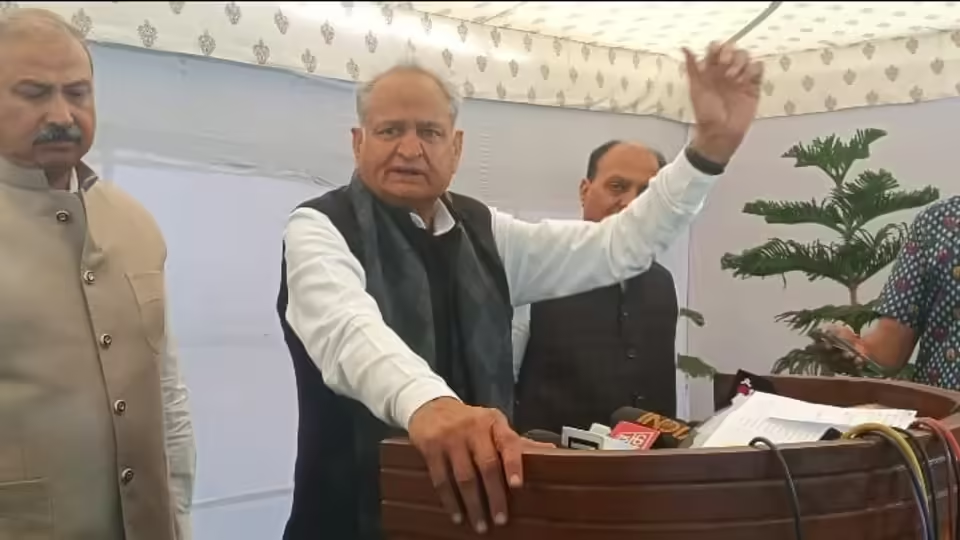
Ashok Gehlot has recently criticized both the government and the Bharatiya Janata Party (BJP), using strong language to express his discontent. In a video statement, he addressed the ongoing debate about the duration of governance, contrasting a two-year period with a five-year term. Gehlot referred to the controversy surrounding this issue as “foolishness,” suggesting that the arguments made by the opposing side lack substance and are not worthy of serious consideration.
The context of his remarks revolves around the political dynamics in the state, where the opposition has been vocal about various governance issues. Gehlot’s comments underscore his belief that the focus should not be on trivial debates but rather on the significant challenges facing the state and the nation. He emphasized that the government should prioritize effective governance and public welfare rather than getting embroiled in petty disputes that do not contribute to the public good.
By labeling the two-year versus five-year discussion as “foolishness,” Gehlot aims to redirect the conversation toward more pressing matters that require attention and action. His criticism of the BJP also reflects the broader political rivalry in India, where parties often engage in fierce exchanges to gain an advantage. Gehlot’s remarks are indicative of his commitment to addressing real issues that affect the lives of citizens, rather than allowing political theatrics to overshadow genuine governance efforts.
In summary, Ashok Gehlot’s statements serve as a reminder of the importance of focusing on substantive policy issues rather than engaging in trivial disputes. His critique of both the government and the BJP highlights the need for political leaders to prioritize the welfare of the populace and to engage in constructive dialogue that leads to effective governance. The political landscape in India continues to evolve, and leaders like Gehlot play a crucial role in shaping the discourse around governance and accountability.