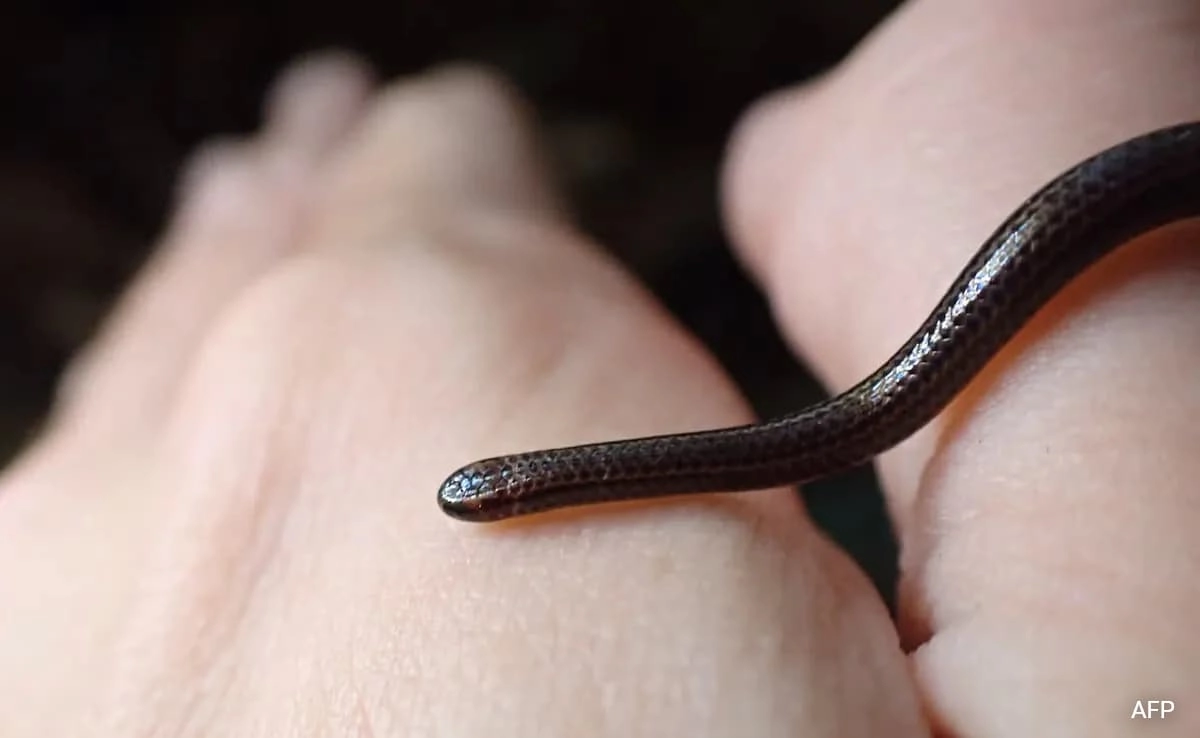
In a remarkable turn of events, scientists have rediscovered the world’s smallest snake, the Barbados threadsnake, once feared extinct. This tiny serpent, measuring a mere 10 centimeters in length, had not been seen in over five years, leading researchers to believe it had vanished from the island of Barbados. Its elusive nature and delicate habitat made it a challenging species to study, and conservationists feared that habitat loss and environmental changes had led to its decline. The rediscovery of this diminutive snake not only brings hope for the species but also highlights the importance of ongoing conservation efforts in protecting vulnerable wildlife.
The Barbados threadsnake is notable not just for its size but also for its unique characteristics. Its slender, elongated body and smooth, shiny scales make it a distinctive member of the snake family. Unlike many of its larger relatives, this particular snake is non-venomous and primarily feeds on small invertebrates, such as earthworms. The threadsnake’s rarity and its specialized habitat underscore the fragility of its existence, making the recent findings all the more significant. Researchers are now working diligently to monitor its population and assess the health of its habitat, which is crucial for the snake’s survival.
This rediscovery serves as a poignant reminder of the unpredictable nature of wildlife and the potential for species recovery. It emphasizes the need for continued investment in conservation initiatives and habitat preservation. As scientists celebrate this significant finding, they are also raising awareness about the broader environmental challenges that threaten not only the Barbados threadsnake but countless other species around the globe. The successful sighting of the snake encourages a renewed commitment to protecting ecosystems, fostering a deeper understanding of the intricate web of life that sustains us all.