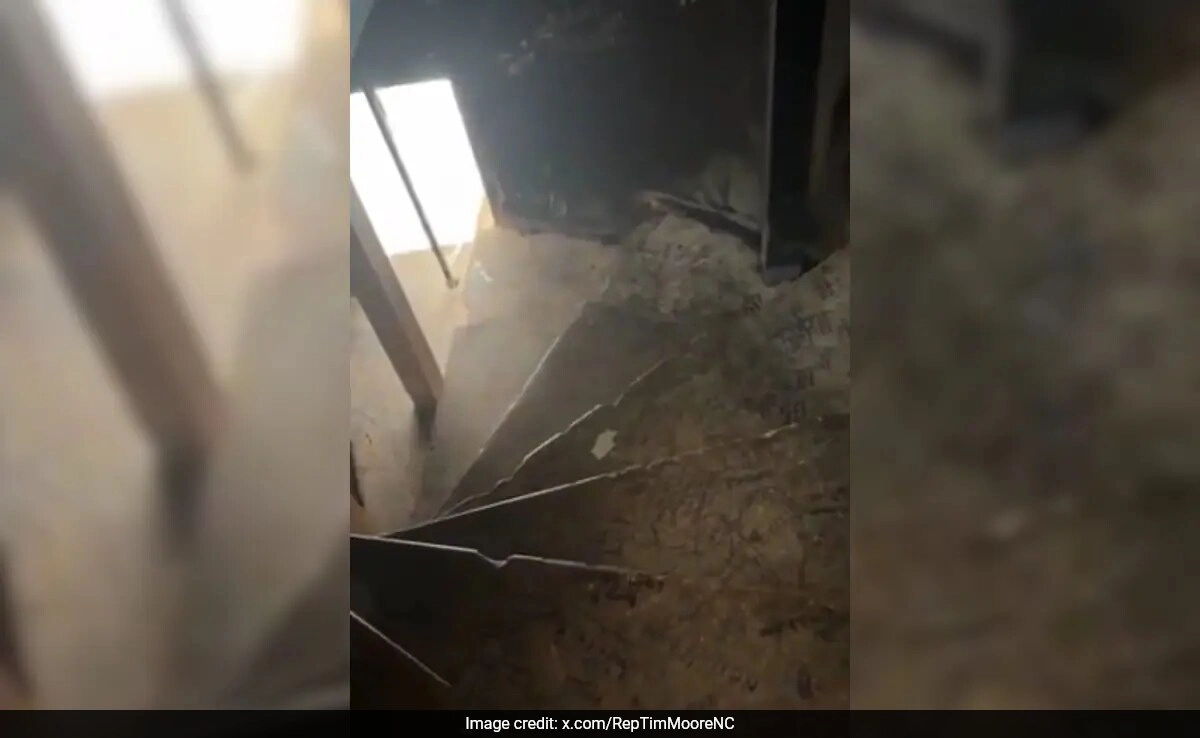
In a captivating revelation, a U.S. politician recently unveiled a hidden passageway located beneath the Lincoln Room in the Capitol. This secret corridor, shrouded in history and mystery, offers a fascinating glimpse into the architectural intricacies of one of America’s most iconic buildings. The Lincoln Room, known for its historical significance as a space where President Abraham Lincoln once met with advisors and dignitaries, now serves as a focal point for discussions surrounding the hidden elements of the Capitol’s design.
As the politician guided viewers through the passageway, it became clear that this hidden space was not just a mere curiosity but a testament to the Capitol’s rich history. The corridor, which runs beneath the well-known rooms of the Capitol, was likely designed with both functionality and security in mind. Such passageways have historically served various purposes, from facilitating discreet movement for lawmakers to providing emergency escape routes during times of crisis. The existence of this passageway underscores the Capitol’s layered history, revealing how the building has evolved over time, adapting to the needs of those who work within its walls.
The discovery also raises questions about what other secrets might lie hidden within the Capitol. Given its long history and the many renovations it has undergone, there are likely numerous undiscovered or forgotten spaces that could tell stories of past presidents, lawmakers, and pivotal moments in American history. This particular revelation also serves to remind the public that the Capitol is not just a seat of government but a living museum, rich with narratives that reflect the nation’s journey through time. As curiosity grows around this hidden passage, it encourages further exploration of the Capitol’s less visible features and the stories they hold.
In an era where transparency and accountability in government are more crucial than ever, such discoveries can help bridge the gap between the public and their representatives. By sharing these hidden aspects of the Capitol, politicians can foster a sense of connection and curiosity among citizens, encouraging them to engage more deeply with their government and its history. This unveiling signifies not only a physical exploration of the Capitol’s architecture but also a metaphorical journey into the heart of American democracy, inviting all to reflect on the past while looking towards the future.