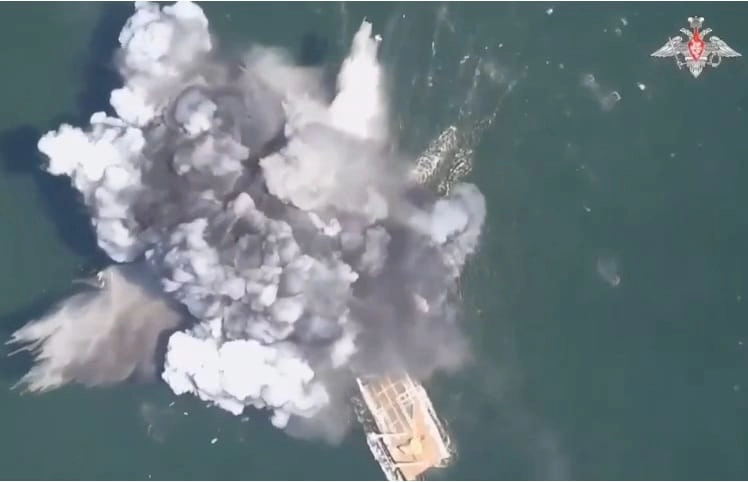
In a significant development in the ongoing conflict between Ukraine and Russia, reports have emerged of Ukraine’s largest naval ship being sunk during Russia’s first sea drone attack. This incident marks a notable escalation in maritime warfare, showcasing the evolving tactics employed by both sides in the war. The ship, which played a crucial role in Ukraine’s naval capabilities, was targeted by a swarm of sea drones, a strategy that has gained prominence in modern naval confrontations. This incident not only highlights the vulnerability of naval vessels in the face of innovative drone technology but also raises questions about the future of naval engagements in the region.
The attack underscores the changing dynamics of naval power, as traditional methods of warfare are increasingly being supplemented or replaced by unmanned systems. Sea drones, which can operate autonomously or be remotely controlled, allow for precise strikes while minimizing risk to personnel. In this instance, the successful sinking of Ukraine’s largest ship demonstrates Russia’s ability to adapt to and leverage new technologies in its military strategy. This incident could prompt a reevaluation of naval defenses for Ukraine, as well as for other nations observing the conflict, as they consider the implications of drone warfare on naval operations.
Furthermore, this event could have broader strategic implications for the Black Sea region. As both Ukraine and Russia continue to assert their maritime presence, the use of sea drones may lead to a new phase of naval conflict. The sinking of such a significant vessel may impact morale within Ukraine’s naval forces and could lead to increased tensions between the two nations. Additionally, this incident may provoke reactions from international allies, who are closely monitoring the situation and may need to reconsider their support for Ukraine’s naval defenses in light of the evolving threat landscape.
Overall, the sinking of Ukraine’s largest naval ship during Russia’s inaugural sea drone attack marks a pivotal moment in the war, exemplifying the shift towards unmanned warfare in maritime settings. As both countries adapt to these new realities, the potential for increased hostilities in the Black Sea region remains high, necessitating vigilance and strategic foresight from all parties involved. The implications of this attack may reverberate throughout the conflict, influencing military strategies, international relations, and the future of naval engagement in modern warfare.