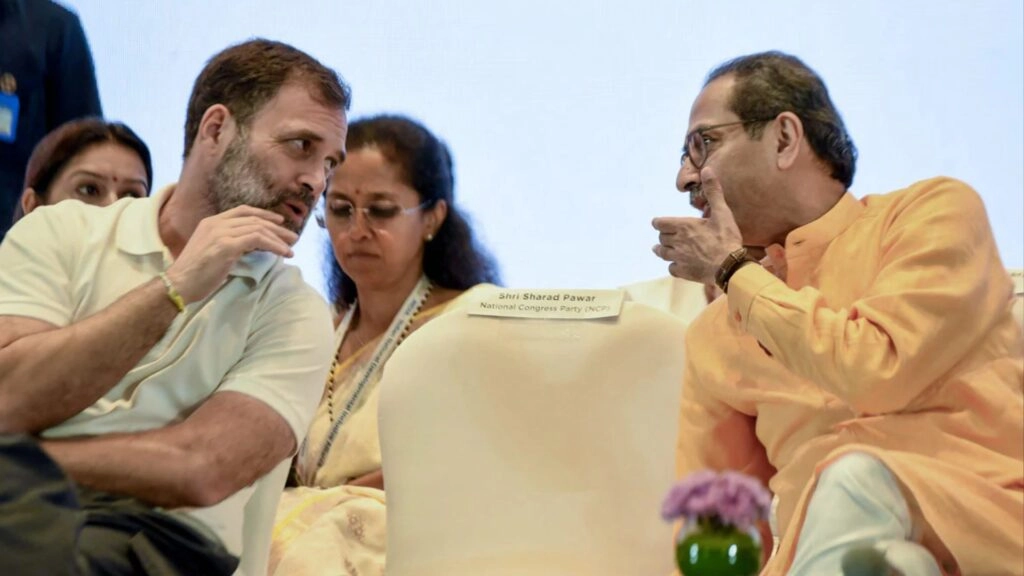
Uddhav Thackeray’s faction of the Shiv Sena has recently made headlines by accusing Congress of betrayal and labeling the Bharatiya Janata Party (BJP) as a “B team.” This strong rhetoric reflects the growing discontent within the party regarding its alliances and the political landscape in Maharashtra. The statement stems from a sense of perceived abandonment by allies, particularly Congress, which has historically been a significant player in the state’s politics. Uddhav’s faction believes that Congress has failed to uphold its commitments, leading to a breakdown in trust that has serious implications for their collaborative efforts in the region.
Moreover, the term “B team” in reference to the BJP suggests that Uddhav’s faction sees the BJP not merely as an opposition party, but as an entity that undermines regional parties and their agendas. This claim indicates a shift in political dynamics where former allies are now seen as adversaries. The Shiv Sena, under Uddhav’s leadership, has been struggling to maintain its identity and political relevance, especially after the split in the party that led to the formation of factions. This internal discord has prompted his faction to reevaluate its position and alliances, leading to a more confrontational stance against both the BJP and Congress.
In the broader context, these statements highlight the challenges faced by regional parties in India, which often find themselves caught between national narratives and local aspirations. The Shiv Sena, with its strong roots in Maharashtra, seeks to assert its influence amid the rising dominance of the BJP. By calling out Congress and the BJP, Uddhav Thackeray is attempting to rally support from disillusioned voters who may feel marginalized by the centralization of power within larger national parties. This strategy aims to reinforce the Shiv Sena’s commitment to regional issues and its role as a viable alternative in state politics, even as it navigates the complexities of its alliances and rivalries.