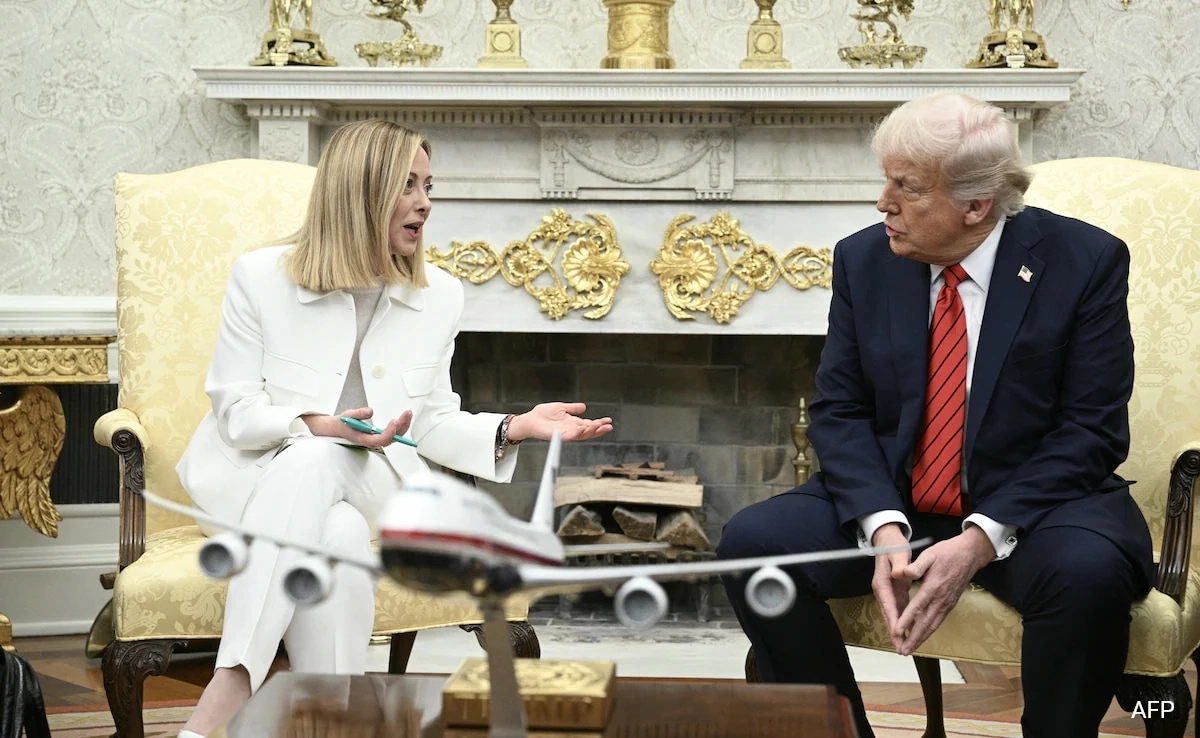
Former President Donald Trump has expressed strong confidence in his ability to negotiate a tariff deal with the European Union, stating that he would be able to secure an agreement “100%.” This assertion comes at a time when international trade dynamics are increasingly complex, and the need for cooperative economic policies is more pressing than ever. Trump’s comments were made during a period marked by rising tensions in global trade, particularly between the United States and various European nations. His remarks highlight a commitment to fostering stronger relationships with European allies while emphasizing the importance of fair trade practices.
The context of Trump’s statement is further underscored by the recent visit of Italy’s Prime Minister Giorgia Meloni to the United States. Meloni’s visit signifies a renewed focus on transatlantic relations, with trade being a crucial aspect of the discussions. Italy, as one of Europe’s largest economies, plays a pivotal role in shaping the EU’s trade policies. Meloni’s engagement with U.S. officials could pave the way for collaborative efforts aimed at addressing shared economic challenges, including tariffs that have historically caused friction between the U.S. and EU member states.
Trump’s willingness to engage in tariff negotiations is particularly noteworthy given the backdrop of his previous administration’s confrontational approach to trade. During his presidency, he imposed tariffs on various goods from the EU, leading to retaliatory measures and strained relations. However, his current stance suggests a shift towards diplomacy and negotiation, reflecting an understanding that a cooperative approach could yield better outcomes for both parties involved. The potential for a tariff deal could not only enhance trade between the U.S. and EU but also stabilize the global economy, which has been facing uncertainties due to geopolitical tensions and the lingering effects of the pandemic.
As discussions around tariffs and trade agreements continue to evolve, the importance of building strong alliances cannot be overstated. Trump’s assertion and Meloni’s visit may serve as catalysts for renewed dialogue on economic cooperation. By prioritizing negotiations and seeking mutually beneficial arrangements, both leaders could contribute to a more stable and prosperous economic landscape, benefiting businesses and consumers on both sides of the Atlantic. The outcome of these discussions will likely have far-reaching implications for international trade and economic relations in the years to come.