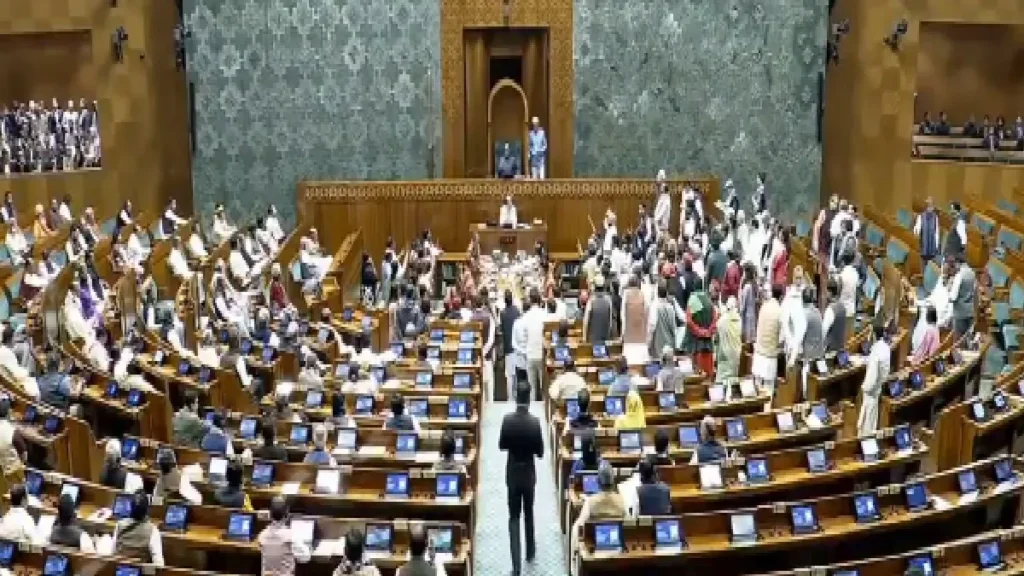
West Bengal Chief Minister Mamata Banerjee’s party, the Trinamool Congress (TMC), has opted not to support the opposition’s notice for a no-confidence motion against the Lok Sabha Speaker, Om Birla. This decision has significant implications for the political landscape in India, particularly in the context of the ongoing tensions between the ruling party and the opposition. The no-confidence motion is a parliamentary tool that allows members to express their lack of confidence in the Speaker, who plays a crucial role in maintaining order and fairness in the House. The TMC’s refusal to back the motion indicates a strategic move, possibly aimed at maintaining its own political interests and positioning within the broader coalition.
With the TMC stepping back, the path forward for the opposition will likely involve rallying support from other parties to gather the necessary votes to proceed with the no-confidence motion. The process typically requires a substantial majority to be effective, and without the support of a significant player like the TMC, the opposition’s chances of success may be diminished. This situation reflects the complex dynamics of Indian politics, where alliances can shift rapidly and the balance of power is often precarious.
The implications of the TMC’s decision are manifold. On one hand, it may signal a desire for a more stable parliamentary environment, allowing the Speaker to perform his duties without the constant threat of a no-confidence motion looming over him. On the other hand, this could also be interpreted as the TMC prioritizing its relationship with the ruling party or seeking to distance itself from the ongoing turmoil that often accompanies such motions. As the political climate evolves, it will be critical to observe how this decision influences future parliamentary proceedings and the strategies of the opposition moving forward.