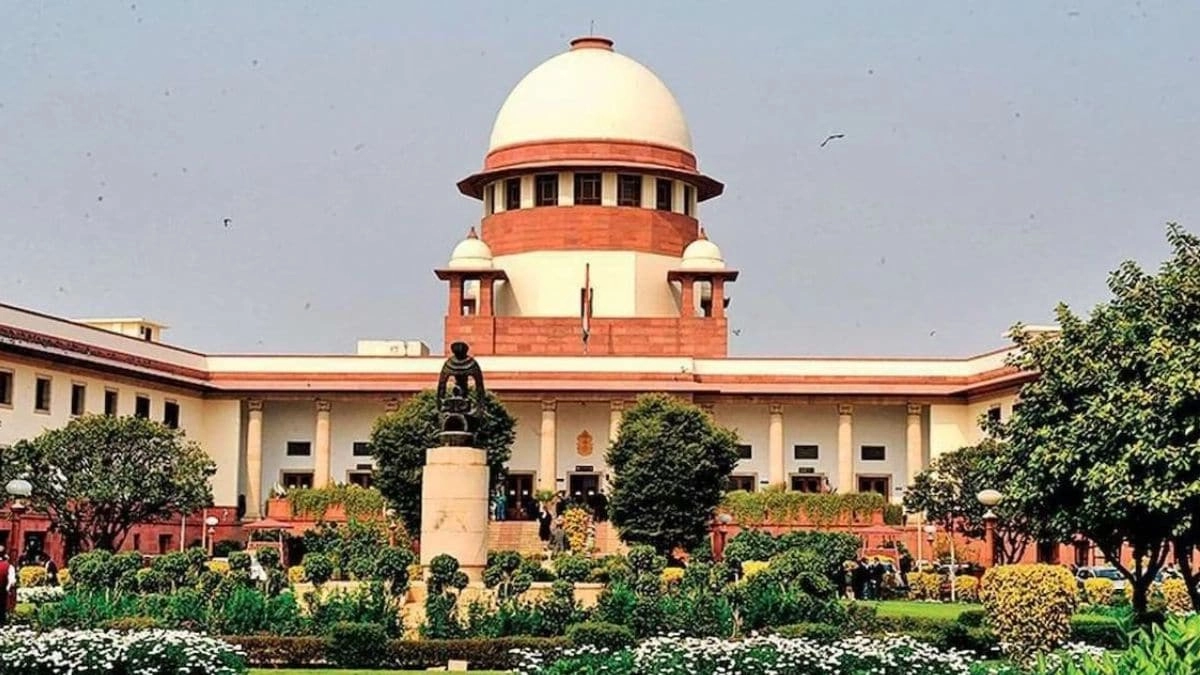
In a significant ruling, the Supreme Court has granted bail to a leader of the Popular Front of India (PFI), highlighting a critical perspective on the intersection of ideology and legal accountability. The court’s decision underscores the principle that individuals cannot be imprisoned solely based on their ideological beliefs. This ruling comes in the context of the ongoing debates about freedom of expression and the limits of state power in regulating political dissent. The PFI, which has been under scrutiny for its alleged extremist views and activities, has faced numerous legal challenges, leading to arrests and detentions of its members.
The Supreme Court’s stance emphasizes the importance of distinguishing between actions that may pose a threat to public order and mere expression of ideology, which is protected under the constitution. This ruling serves as a reminder that the legal system must uphold the rights of individuals, even in cases where their beliefs may be controversial. The court has reiterated that the state cannot suppress dissenting voices or imprison individuals merely because their views diverge from the mainstream. In this light, the ruling is seen as a reinforcement of democratic values and the rule of law.
Moreover, the bail granted to the PFI leader reflects a growing recognition within the judiciary of the need to protect civil liberties, particularly in an era where political ideologies can often lead to polarizing views and actions. The court’s decision may also prompt a reassessment of how law enforcement agencies approach cases involving political groups and the application of legal provisions that could infringe upon individual rights. As the legal landscape evolves, this ruling could pave the way for a more nuanced understanding of the relationship between ideology and the law, ensuring that the principles of justice are maintained without compromising democratic freedoms.
In conclusion, the Supreme Court’s ruling on the bail application of the PFI leader serves as a pivotal moment in defining the boundaries of ideological expression in relation to legal accountability. It is a reminder that while the state has a responsibility to maintain public order, it must also respect the constitutional rights of individuals. This ruling not only impacts the PFI and its members but also sets a precedent for future cases involving ideological beliefs, reinforcing the notion that a robust democracy thrives on the healthy exchange of ideas, even those that are controversial or unpopular.