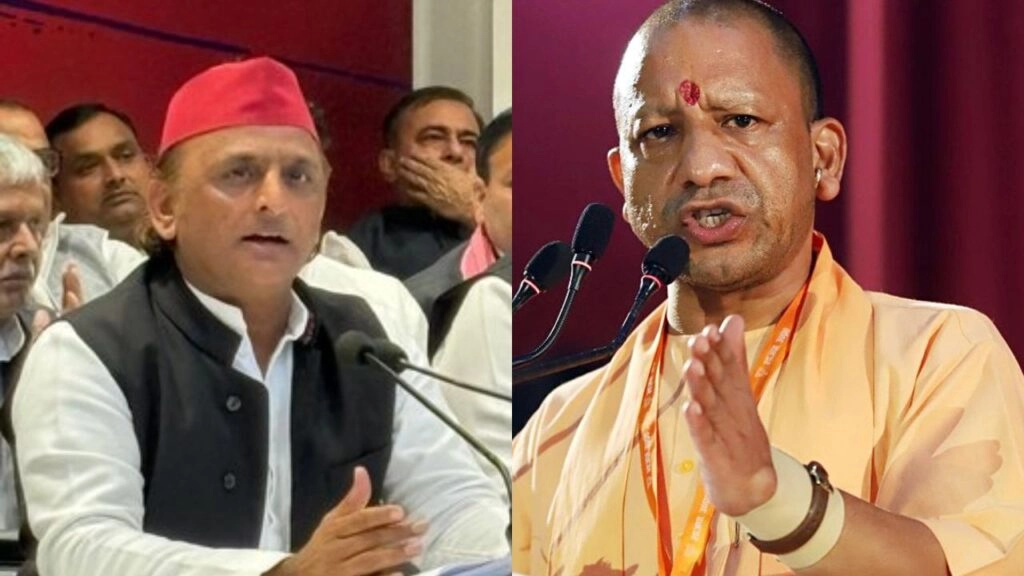
The essence of being a yogi transcends mere appearances, such as wearing a saffron robe. This sentiment was recently echoed by Akhilesh Yadav, who directed his criticism toward the Chief Minister, suggesting that the outward symbols associated with spirituality do not automatically confer wisdom or authenticity. The saffron robe, often associated with spiritual leaders and yogis, has become a topic of debate, as it raises questions about the true nature of leadership and spiritual authority. Yadav’s remarks challenge the notion that external attire is a valid marker of one’s spiritual or yogic status.
In response to Yadav’s statements, there has been a significant backlash from various saints and spiritual leaders. They expressed their anger, emphasizing that the robe carries deep cultural and spiritual significance. For many, the saffron robe symbolizes renunciation, commitment to a higher purpose, and a life dedicated to the service of humanity. The criticism from Yadav was perceived as an affront not just to individuals who don the robe but also to the values and principles that they represent. This incident highlights the ongoing tension between political discourse and spiritual traditions in contemporary society.
The discussion surrounding the saffron robe and the qualifications of a yogi illustrates a broader societal debate about authenticity and representation. In an era where appearances often dominate public perception, the challenge remains to distinguish between genuine spiritual leadership and superficial claims. The anger of the saints reflects a deep-seated belief that true spirituality cannot be commodified or reduced to mere symbols. As political figures engage in discussions that touch upon spiritual matters, it becomes increasingly important to navigate these conversations with sensitivity and respect for the traditions they invoke. Ultimately, the dialogue initiated by Yadav’s comments serves as a reminder of the complexities that intertwine politics, spirituality, and societal values.