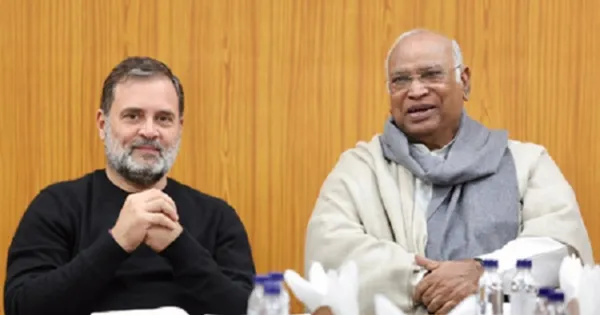
The recent political dialogue surrounding Rahul Gandhi has sparked considerable debate, particularly in light of Union Law Minister Kiren Rijiju’s statement regarding the government’s stance on taking direct action against the Congress leader. Rijiju emphasized that the government is not inclined to pursue legal measures against Gandhi at this time. This decision appears to be influenced by several factors, including the political climate and the ramifications of such actions on democratic processes in India.
Rijiju’s remarks suggest a strategic approach, where the government is opting to refrain from escalating tensions with the opposition. By choosing not to act directly against Gandhi, the government seems to be prioritizing stability and the preservation of democratic norms over immediate political gains. It raises questions about the broader implications of this decision on the relationship between the ruling party and the opposition, as well as the ongoing discourse surrounding accountability and political rivalry in the country.
Moreover, the decision to shelve any motion against Gandhi may reflect a recognition of the potential backlash from the electorate. Engaging in direct confrontations, particularly with a prominent figure like Rahul Gandhi, could alienate certain voter segments and provoke a stronger opposition response. As the political landscape evolves, the government’s cautious approach may serve to maintain a balance while allowing for continued dialogue and debate within the democratic framework.
Ultimately, Kiren Rijiju’s insights shed light on the complex interplay between governance, political strategy, and public perception. By choosing not to initiate direct action against Gandhi, the government is navigating a delicate path that requires careful consideration of both immediate objectives and long-term implications for India’s political ecosystem. This decision underscores the importance of dialogue and the need for constructive engagement in fostering a healthy democratic environment.