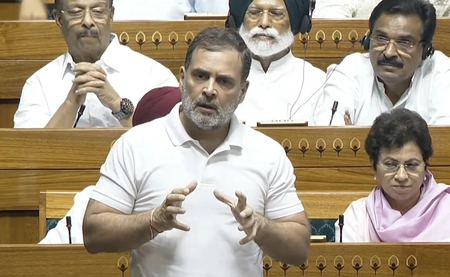
Rahul Gandhi recently showcased an unpublished memoir of former Army Chief General Manoj Mukund Naravane within the premises of Parliament. This act is part of his ongoing criticism of the Prime Minister, whom he accuses of failing to uphold his responsibilities, particularly in matters pertaining to national security. By highlighting this memoir, Rahul aims to draw attention to issues he believes have not been adequately addressed by the government, especially those related to the military and defense policies.
The memoir, which has not been publicly released, carries significant weight as it contains insights and reflections from a high-ranking military official. Rahul’s decision to present this document in such a prominent setting underscores his strategy to challenge the Prime Minister’s leadership and accountability. He argues that the government has overlooked crucial aspects of defense and security that are vital for the country’s integrity. This move is seen as a tactical effort to engage both the public and fellow politicians in a discussion about the administration’s approach to safeguarding the nation.
Rahul Gandhi’s actions also reflect a broader narrative of dissent against the ruling party’s policies. By using the memoir as a focal point, he seeks to mobilize support for his stance on military issues and to question the effectiveness of the Prime Minister’s administration. The implications of this display extend beyond mere political rivalry; they touch on the essential need for transparency and dialogue concerning the defense sector. In this context, the memoir serves as a symbol of the critical conversations that need to happen regarding the direction of India’s security strategy and the government’s role in ensuring the safety of its citizens.
In summary, Rahul’s presentation of General Naravane’s unpublished memoir is more than just a political tactic; it is a deliberate attempt to spotlight perceived shortcomings in the current government’s approach to national security. By leveraging the insights of a respected military leader, he aims to catalyze a deeper examination of the responsibilities that come with leadership in times of uncertainty. Ultimately, this incident reflects ongoing tensions in Indian politics, particularly regarding defense issues and the accountability of those in power.