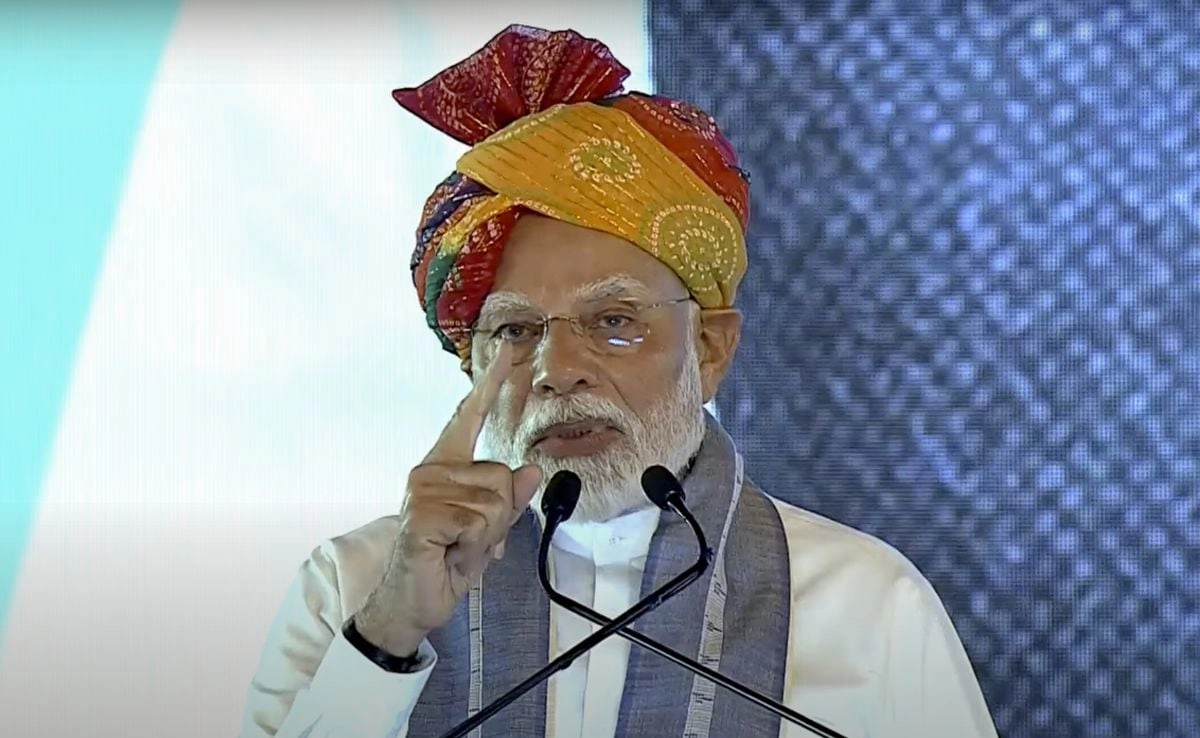
During a recent address that has generated significant attention, Prime Minister Narendra Modi posed a provocative question regarding the representation of Muslims in leadership positions, specifically in Congress. He challenged the party to name a prominent Muslim leader within its ranks, suggesting that there is a lack of genuine representation for the community. Modi’s remarks came during a broader discussion about the Waqf properties and their management, emphasizing the need for transparency and accountability in how these assets are handled. The Prime Minister’s dare not only highlights the ongoing political dynamics surrounding religious identity in India but also raises questions about the inclusivity of political parties in reflecting the diverse makeup of the nation.
Modi’s challenge serves as a critique of Congress, a party with a historical legacy that has often positioned itself as a champion of secularism and minority rights. By questioning their ability to name a Muslim chief, he implies a disconnect between the party’s claims of inclusivity and its actual practices. This assertion feeds into a larger narrative that has been prevalent in Indian politics, where the representation of various communities, particularly minorities, becomes a focal point during election campaigns. The Prime Minister’s comments also underscore the significance of leadership representation in fostering trust among different religious groups, particularly in a country as diverse as India.
Furthermore, the context of Waqf properties—an important aspect of Muslim community resources—adds another layer to Modi’s challenge. The management and allocation of these properties are crucial for the socio-economic development of the Muslim community, and the Prime Minister’s focus on this issue indicates a broader agenda to ensure that these assets are utilized effectively. By daring Congress to identify a Muslim leader, Modi aims to shift the conversation towards accountability and governance, urging political parties to demonstrate their commitment to all communities, rather than merely making symbolic gestures.
In conclusion, Prime Minister Modi’s remarks are not just a political jab but a call to action for greater representation and responsibility within political parties. The dialogue surrounding Muslim leadership in Congress and the management of Waqf properties is emblematic of the challenges faced by minority communities in India. As the political landscape continues to evolve, the need for genuine representation and effective governance remains a pressing issue that must be addressed to foster unity and progress in a diverse society.