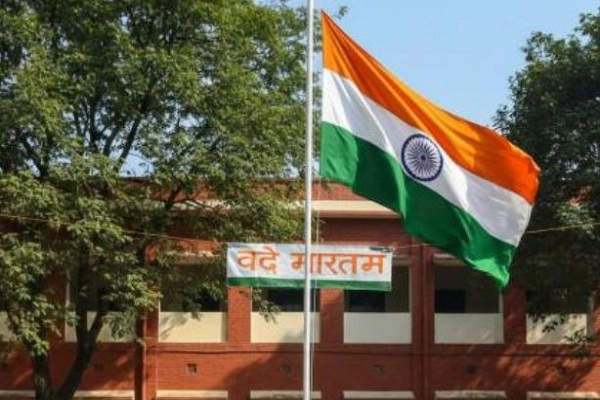
The Personal Law Board has issued a declaration stating that the government’s order regarding the national song “Vande Mataram” is unconstitutional. This announcement has stirred considerable debate and concern among various communities, particularly regarding the implications for individual rights and freedoms in the context of cultural and religious identities. The Board, which represents the interests of specific religious communities, believes that mandating the singing or recitation of “Vande Mataram” infringes upon the personal liberties guaranteed by the Constitution.
In response to the government’s directive, the Personal Law Board has signaled its intention to challenge this order legally, should it not be retracted. They argue that while the song is an important part of India’s national heritage, its compulsory recitation may not align with the principles of secularism and personal choice that underpin the nation’s constitutional framework. The Board has emphasized the need for dialogue and understanding among different cultural groups to ensure that national pride does not come at the expense of individual rights.
The potential court case could set a significant precedent regarding the relationship between state mandates and personal beliefs. If the Personal Law Board proceeds with its legal challenge, it will likely attract attention from various civil rights organizations and legal experts who are keen to explore the balance between national identity and personal freedoms. This situation highlights the ongoing tension in India between asserting national unity and respecting the diversity of its population, which is characterized by a multitude of languages, religions, and cultures.
As the debate unfolds, it remains crucial for all stakeholders to engage in constructive conversations that respect both national sentiments and individual rights. The outcome of this situation may have far-reaching implications for how the state interacts with cultural symbols and the expression of personal beliefs in a country known for its pluralism.