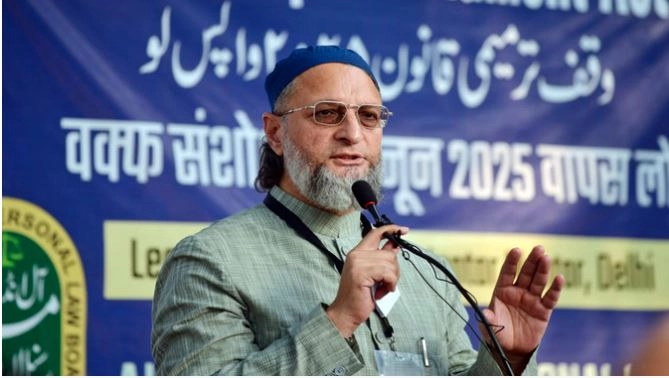
In a recent statement, Asaduddin Owaisi, the prominent leader of the All India Majlis-e-Ittehad-ul-Muslimeen (AIMIM), directed pointed criticism at BJP leader Navneet Rana regarding her comments on family planning. Owaisi’s remarks came in response to Rana’s assertion that families should aim for at least four children. He provocatively challenged her by suggesting that if she genuinely believes in her own statement, she should consider having eight children instead of just four. His comments were made during a public address, where he emphasized the importance of individual choice in family planning and criticized the notion of imposing such beliefs on others.
Owaisi’s critique highlights a broader debate in India concerning population control and reproductive rights. He argued that the government should not dictate how many children families should have, as this decision is deeply personal and varies from one individual to another. By calling out Rana’s comments, Owaisi sought to underscore the importance of allowing people to make their own choices regarding family size without societal or political pressure. His challenge to her to have eight children was not just a rhetorical flourish but a way to provoke thought about the implications of advocating for larger families in a diverse society.
The exchange reflects ongoing tensions between political parties in India, particularly regarding issues of religion, culture, and personal freedoms. Owaisi, representing a party that often champions minority rights and secularism, positioned himself against the backdrop of a ruling party that has frequently been accused of promoting a Hindu nationalist agenda. This incident serves as a reminder of the complexities involved in discussions surrounding family planning, as they intersect with cultural, religious, and political identities in a country as diverse as India.
As these debates continue, it is essential to consider the broader implications of population policies and how they affect various communities. Owaisi’s comments may resonate with many who feel marginalized by prevailing narratives that dictate personal choices. In a country where family structures and values differ significantly, the call for respecting individual autonomy in reproductive decisions is more relevant than ever. The discourse surrounding such topics will likely persist, as leaders like Owaisi challenge their counterparts to rethink their positions on issues that touch the very fabric of society.