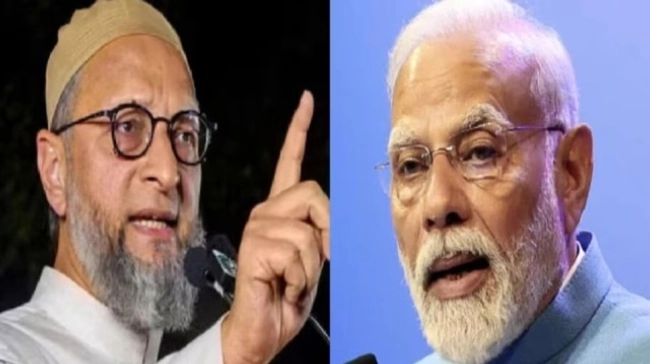
AIMIM leader Asaduddin Owaisi recently challenged Prime Minister Narendra Modi regarding the government’s handling of terrorism and its implications for national security. In his remarks, Owaisi referred to the ongoing crisis in Venezuela, using it as a backdrop to question the effectiveness of Modi’s leadership. He specifically pointed out the Prime Minister’s often-quoted assertion about his strength and resolve, symbolized by the metaphor of a “56-inch chest.” Owaisi’s pointed question was whether, given this formidable image, Modi would take decisive action against those responsible for the 26/11 Mumbai attacks, which were orchestrated by groups based in Pakistan.
Owaisi’s challenge underscores the ongoing debate about national security and the government’s response to terrorism. By invoking the memory of the 2008 Mumbai attacks, he aimed to remind the public of the unresolved issues surrounding the perpetrators who still roam free in Pakistan. This statement resonates with many citizens who feel that the government has not done enough to bring justice for the victims of those horrific events. The implication is that if the Prime Minister truly possesses the strength he claims, he should act against those who threaten India’s security.
The political discourse around terrorism often leads to heightened emotions and nationalistic sentiments, and Owaisi’s remarks are no exception. By directly confronting Modi, he not only challenges the Prime Minister’s image but also calls into question the broader effectiveness of the government’s foreign policy and its commitment to combating terrorism. The reference to Venezuela serves as a stark reminder of how political instability can lead to dire consequences for a nation, drawing a parallel to the challenges India faces in dealing with its neighbors.
Overall, Owaisi’s comments reflect a critical perspective on the current administration’s approach to national security and its ability to address pressing issues. His challenge to Modi can be seen as part of a larger narrative in Indian politics, where opposition parties seek to hold the government accountable for its actions and promises. As the political landscape continues to evolve, such statements will undoubtedly contribute to the ongoing dialogue about India’s security and diplomatic strategies in a complex and often volatile region.