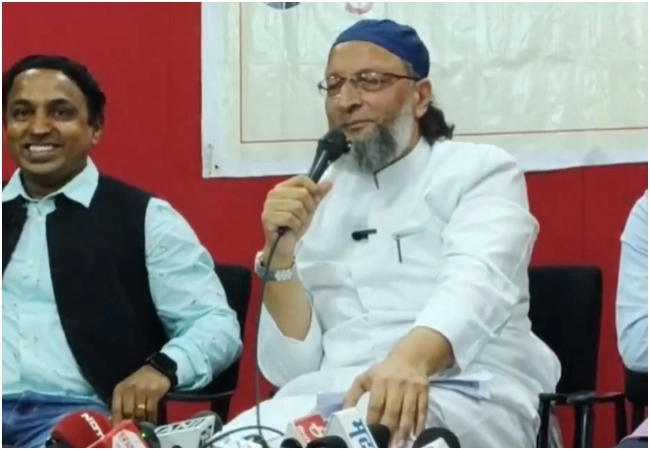
In a recent statement, Member of Parliament Asaduddin Owaisi addressed the growing calls for posthumously awarding the Bharat Ratna to Vinayak Damodar Savarkar, a controversial figure in Indian history. Owaisi expressed his belief that the Bharatiya Janata Party (BJP) would eventually honor Savarkar with this prestigious award. He noted that the ongoing discussions around Savarkar’s legacy and contributions to India’s freedom struggle reflect a broader political agenda that seeks to redefine historical narratives.
Owaisi’s comments highlight the complexities surrounding Savarkar’s legacy, which is often viewed through varied ideological lenses. While some see him as a freedom fighter who laid the groundwork for India’s independence, others criticize him for his controversial views and actions, including his stance on Hindu nationalism. The debate over Savarkar continues to polarize public opinion and influences contemporary political discourse in India.
The MP’s assertion that the BJP would soon bestow the Bharat Ratna upon Savarkar signals an intent to further integrate his legacy into the national narrative. Owaisi cautioned against this potential move, warning that it could signify an attempt to marginalize other freedom fighters and narratives that do not align with the BJP’s ideology. As political parties navigate these sensitive historical discussions, the implications of honoring Savarkar with the Bharat Ratna resonate beyond mere recognition, touching upon issues of identity, nationalism, and the very essence of India’s struggle for freedom.
In conclusion, Owaisi’s remarks reflect the ongoing tensions within Indian politics regarding historical interpretation and the portrayal of national heroes. As discussions about Savarkar’s possible recognition continue, they serve as a reminder of the importance of understanding history in a nuanced manner, recognizing the diverse perspectives that shape India’s past and present. The future of Savarkar’s legacy, and whether it will be honored with the Bharat Ratna, remains a critical issue that could influence the political landscape in the country.