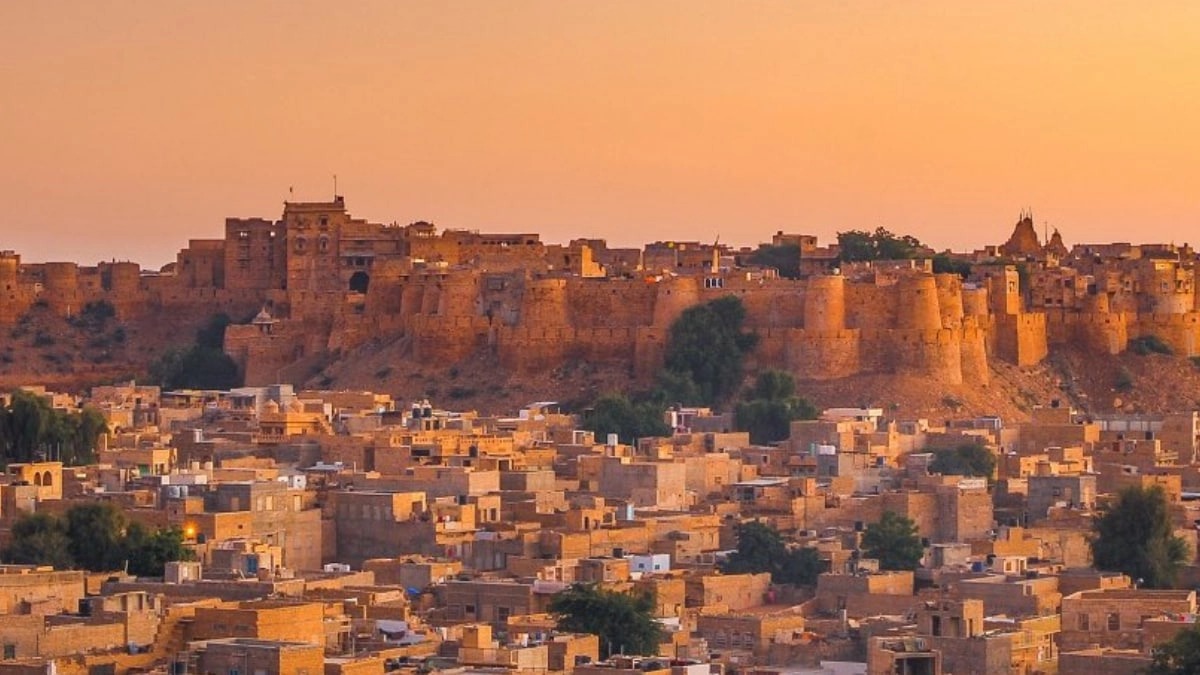
The recent controversy surrounding the depiction of Jaisalmer in an NCERT map has sparked significant outrage, particularly from former royal family members. The map in question illustrates Jaisalmer as part of the Maratha Empire, which has prompted claims of historical inaccuracy. Critics, including the ex-royal family, have labeled this portrayal as “baseless,” arguing that it undermines the true historical context of the region. Jaisalmer, known for its rich heritage and unique identity, was never part of the Maratha Empire, and the misrepresentation in educational materials has raised concerns about the accuracy of historical narratives being taught to students.
The former royal representatives have expressed their displeasure, emphasizing the importance of preserving the historical integrity of Jaisalmer, a city that holds immense cultural significance in Rajasthan. They argue that such inaccuracies in educational resources can lead to a distorted understanding of history among young learners. In their view, it is crucial for educational institutions, like NCERT, to ensure that maps and historical references are meticulously researched and accurately presented to reflect the true lineage and historical facts of regional histories.
In addition to the concerns raised by the royal family, this issue highlights a broader conversation about how history is taught in India. The representation of historical figures and events in educational materials not only shapes students’ understanding of their heritage but also influences national identity. As the debate continues, it calls into question the methodologies used in compiling historical data for educational purposes. Stakeholders from various quarters, including historians, educators, and policymakers, need to engage in dialogue to address these discrepancies and ensure that students receive a well-rounded and factual education regarding their history.
This incident serves as a reminder of the intricate relationship between history, identity, and education in India. As such, it is essential for institutions like NCERT to approach historical documentation with care and precision, recognizing the potential impact their materials have on the perceptions of future generations. The demand for accuracy in educational resources is not just about preserving the past; it is also about fostering a sense of pride and understanding in the rich tapestry of India’s diverse cultural heritage.