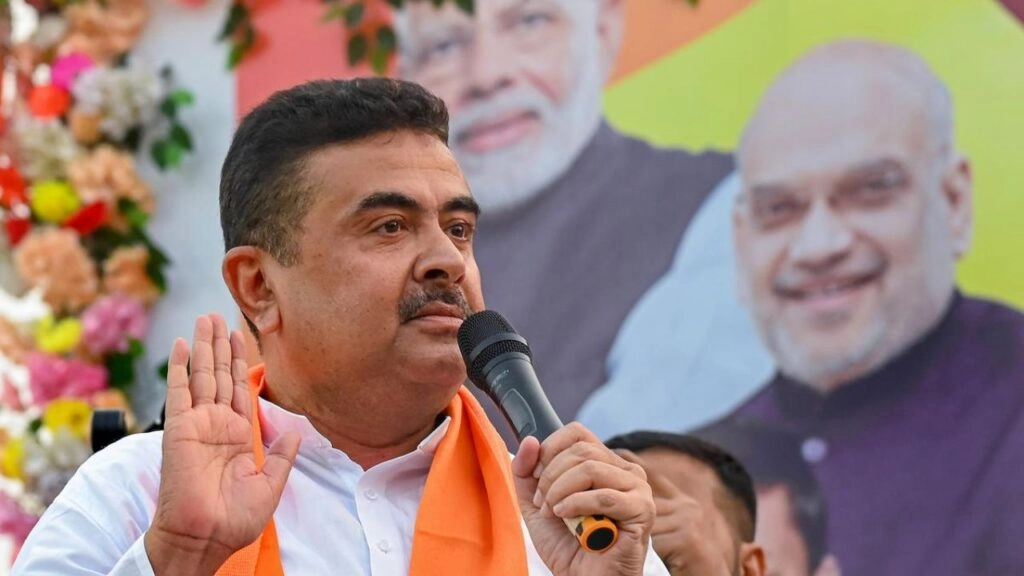
Suvendu Adhikari, a prominent leader of the Bharatiya Janata Party (BJP) in West Bengal, recently faced a violent attack on his convoy, an incident that has sparked significant political tensions in the region. The assault is believed to have been orchestrated by members of the Trinamool Congress (TMC), the ruling party in West Bengal, which has led to severe accusations against them. Adhikari’s supporters have alleged that this attack is part of a broader pattern of political violence and intimidation that they claim the TMC has been perpetuating against opposition leaders and their followers.
In response to the attack, Adhikari and his supporters have staged a protest outside a local police station, demanding swift action against those responsible for the assault. The protest has drawn considerable attention, highlighting the escalating political rivalry in the state. Demonstrators have expressed their outrage not only over the attack on Adhikari but also over the perceived failure of law enforcement to protect political figures and ensure safety during political activities. This situation has underscored the deep divisions within West Bengal’s political landscape, as tensions between the BJP and TMC continue to rise.
The incident has also raised questions about the broader implications for political discourse and safety in West Bengal. As the BJP seeks to strengthen its foothold in the state, it faces increasing resistance from the TMC, which has been accused of using aggressive tactics to maintain control. The situation has the potential to escalate further if the authorities do not address the concerns raised by Adhikari’s supporters. For many, the attack on his convoy is not just an isolated incident but a reflection of a troubling trend of violence that could threaten the democratic process in West Bengal. The coming days will be crucial in determining how the state government and law enforcement respond to these allegations and the growing unrest.