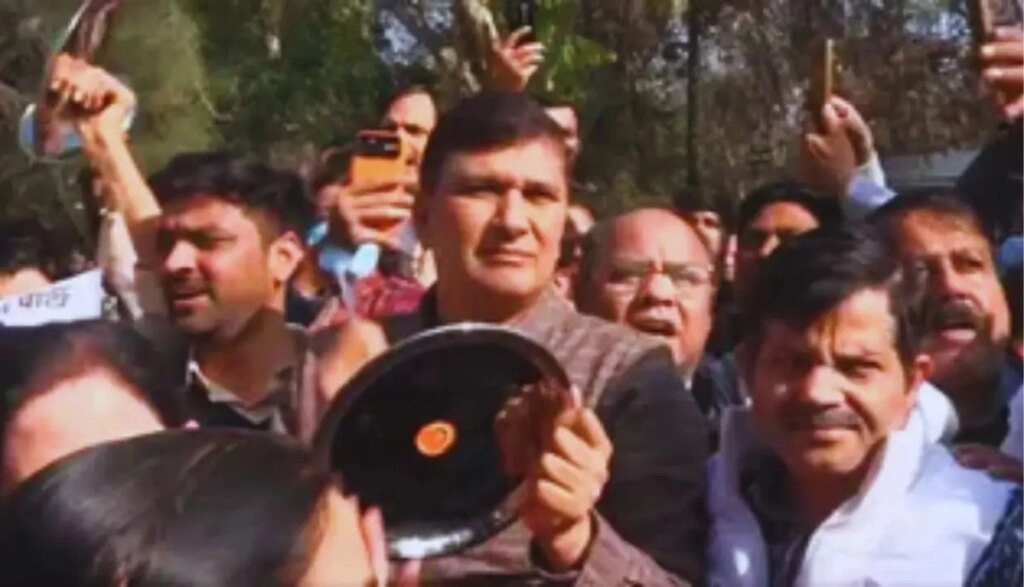
The Aam Aadmi Party (AAP) staged a notable protest at the Delhi Secretariat, employing a unique and attention-grabbing method to convey their message. By playing thali, a traditional Indian metal plate, they aimed to rouse the BJP government, which they perceived as being inattentive and unresponsive to pressing issues facing the citizens. The sound of the thali resonated through the surroundings, symbolizing not just a call to action but also a demand for accountability from the ruling government. AAP’s protest highlighted their frustration over various governance issues, including inadequate public services and the lack of attention to the needs of the populace.
This creative form of protest was not just about noise; it was a strategic move to draw public and media attention to the party’s concerns. The choice of a thali, often associated with celebrations and gatherings, contrasts sharply with the serious tone of the grievances being raised. By using this traditional instrument, AAP sought to create a sense of urgency while also engaging the community in their cause. The imagery of the protest vividly illustrated the party’s commitment to challenging the status quo and advocating for the rights of the citizens of Delhi.
The protest is indicative of the ongoing political dynamics in Delhi, where the AAP continues to position itself as a formidable opposition against the BJP. The use of such an unconventional method reflects AAP’s innovative approach to activism, aiming to awaken a government they believe is neglecting its responsibilities. As the thali echoed through the Secretariat, the message was clear: the AAP is determined to hold the government accountable and ensure that the voices of the people are heard. This event serves as a reminder of the importance of civic engagement and the role of political parties in addressing the needs and concerns of their constituents.