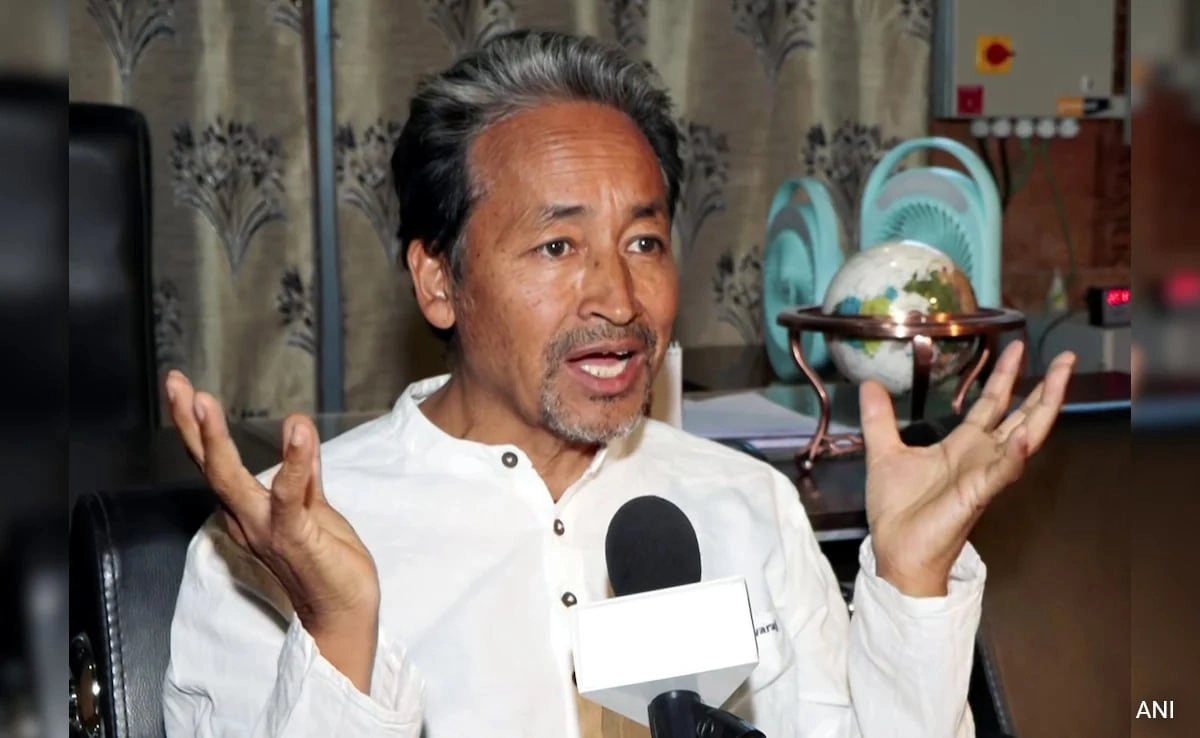
Sonam Wangchuk, the renowned engineer and environmental activist, has been making headlines following his recent arrest. Reports indicate that he was taken into custody earlier today, sparking widespread concern among his supporters and activists who respect his commitment to sustainable development and education in the Himalayan region. Wangchuk, who is well-known for his innovative approaches to climate change and his advocacy for the preservation of the fragile ecosystems in Ladakh, has been a vocal critic of policies that he believes jeopardize the environment and local communities.
Shortly after his arrest, sources revealed that Wangchuk was moved to Jodhpur, a significant shift that has raised questions about the circumstances surrounding his detention. The reasons for his arrest remain unclear, but it is expected that further details will emerge as the situation develops. His supporters have taken to social media to express their outrage, urging authorities to release him immediately. Many are rallying around his cause, emphasizing the importance of protecting the environment and the rights of local populations in the face of rapid development and climate challenges.
Wangchuk’s approach has always been rooted in a deep understanding of the cultural and environmental nuances of the Himalayas. He has dedicated his life to finding sustainable solutions that respect indigenous knowledge and practices. As news of his arrest spreads, there is a growing movement calling for accountability and transparency from the authorities. Activists are concerned that this incident could be an attempt to stifle dissent and silence those who advocate for environmental justice. The coming days will be critical in determining the public’s reaction and the potential implications for activism in the region.
As the situation unfolds, many are keeping a close eye on the developments surrounding Sonam Wangchuk’s case. His work has inspired countless individuals, and his arrest has ignited a conversation about the importance of protecting both the environment and human rights. The broader implications of this event may resonate far beyond the immediate context, highlighting the ongoing struggles faced by environmental advocates in India and around the world.