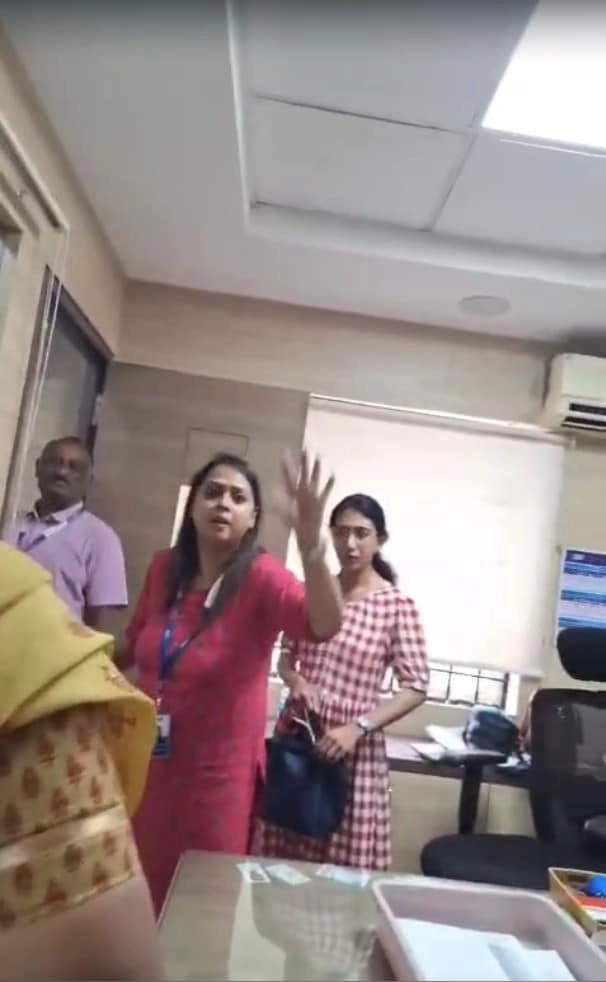
In a recent interaction that has caught the attention of many, a customer responded to an SBI manager’s comment, “This is India,” with a firm assertion of “Kannada First.” The exchange highlights the ongoing conversation around regional pride and the importance of local languages in India, a country known for its rich tapestry of cultures and languages. The SBI manager’s comment seemed to come from a place of national pride, likely intending to emphasize the unity and diversity of India as a nation. However, the customer’s response points to a growing sentiment among various regional communities that their languages and cultures deserve recognition and respect alongside the national identity.
The phrase “Kannada First” serves as a powerful reminder of the significance of local identities in a vast and diverse country like India. Kannada, the official language of Karnataka, is not just a means of communication but also a vessel for the state’s history, literature, and cultural heritage. By asserting “Kannada First,” the customer is advocating for the prioritization of regional languages and cultures in public discourse and everyday interactions, emphasizing that while national identity is important, it should not overshadow the rich diversity found within the states.
This exchange also sheds light on the broader issue of language politics in India, where various linguistic groups are often engaged in a struggle for recognition and rights. Many regions have seen movements advocating for the promotion of local languages in education, administration, and public life. The customer’s response to the SBI manager can be viewed as part of this larger narrative, signaling a demand for inclusivity and respect for local languages in a country where linguistic diversity is a defining characteristic. Ultimately, this incident serves as a microcosm of the complex relationship between national identity and regional pride in India, prompting reflections on how to balance these identities harmoniously in a multicultural society.