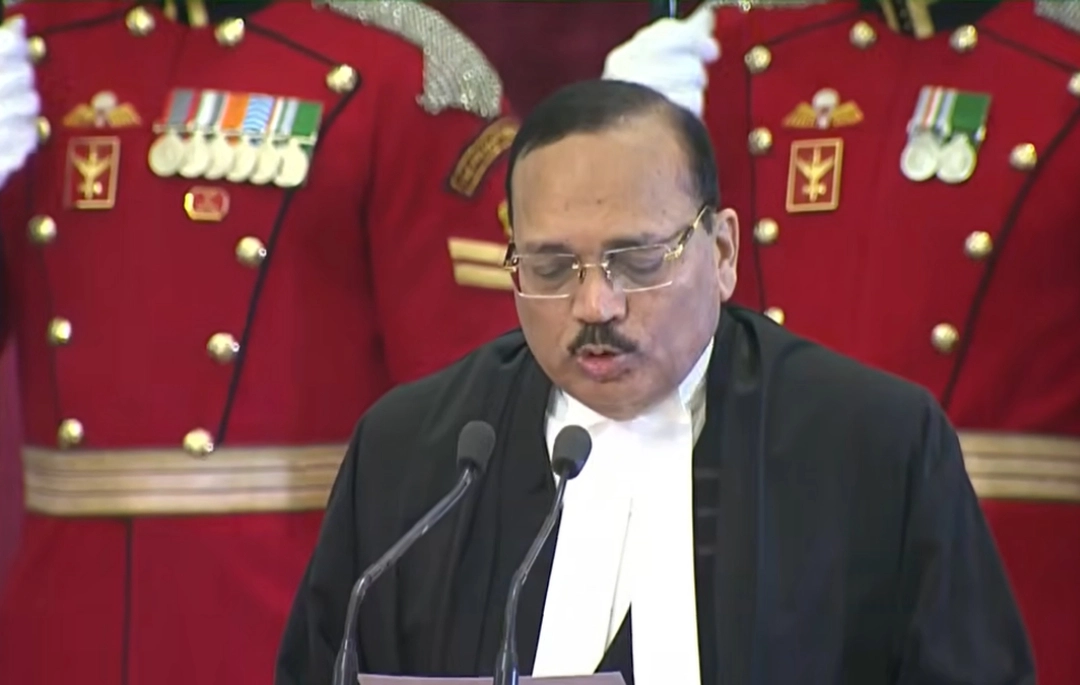
Justice Surya Kant was officially sworn in as the 53rd Chief Justice of India, marking a significant milestone in his distinguished judicial career. The ceremony took place at the Rashtrapati Bhavan, where he took the oath of office in the presence of notable dignitaries, including President Droupadi Murmu and various high-ranking officials from the judiciary and government. Justice Kant succeeds Justice N.V. Ramana, who held the position prior to him and contributed significantly to the Indian judiciary during his tenure.
Justice Surya Kant brings with him a wealth of experience from his extensive service in the legal field. Before his elevation to the Supreme Court, he served as the Chief Justice of the Punjab and Haryana High Court, where he was known for his commitment to upholding the rule of law and ensuring justice. His judicial philosophy emphasizes the importance of social justice and the protection of fundamental rights, reflecting a deep understanding of the constitutional framework of India. His appointment is anticipated to influence various landmark decisions, as he has a reputation for delivering fair and impartial judgments.
As Chief Justice, Justice Kant faces several challenges, including managing a backlog of cases that has plagued the Indian judicial system for years. His leadership will be crucial in implementing reforms aimed at expediting the judicial process and enhancing access to justice for all citizens. Moreover, his tenure comes at a pivotal time when the judiciary is under scrutiny, and there is a pressing need for transparency and accountability. Legal experts and the public alike will be watching closely as he navigates these challenges and strives to uphold the integrity of the Supreme Court.
Justice Kant’s appointment is not just a personal achievement but also a testament to his dedication to the legal profession and his commitment to serving the people of India. As he embarks on this new chapter in his career, there is a collective hope that he will foster an environment of judicial excellence, inspire confidence in the legal system, and contribute positively to the evolving landscape of Indian jurisprudence. His leadership promises to be a pivotal force in shaping the future of the Supreme Court and, by extension, the Indian legal system.