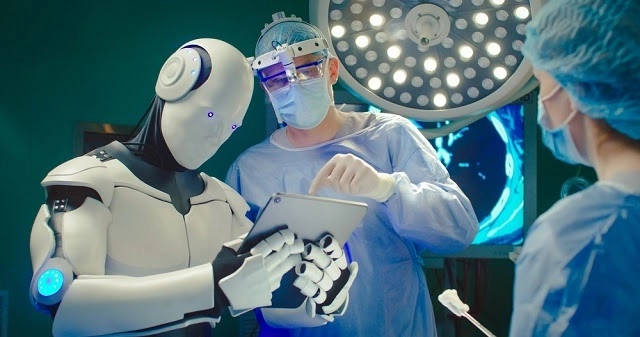
The landscape of medical imaging is undergoing a significant transformation as artificial intelligence (AI) technologies increasingly take on roles traditionally held by medical professionals. With advancements in machine learning and image analysis, AI systems are now capable of performing tasks such as sonography and MRI scans with remarkable accuracy. This shift raises important questions about the future of healthcare, particularly concerning the roles of doctors and radiologists in diagnostic imaging.
As AI continues to evolve, it is becoming adept at interpreting complex medical images. Algorithms can analyze sonograms and MRI scans, identifying patterns and anomalies that may indicate various health conditions. This capability not only enhances the speed at which diagnoses can be made but also reduces the risk of human error. However, the reliance on AI for such critical tasks prompts a reevaluation of the physician’s role in the diagnostic process. While AI can provide valuable assistance, the need for human oversight remains paramount. Doctors are still essential for making nuanced decisions based on the context of each patient’s situation, as well as for discussing results and treatment options with patients.
Moreover, the integration of AI into medical imaging is likely to have broader implications for healthcare delivery. As AI tools become more prevalent, they may help alleviate shortages of healthcare professionals in certain areas, providing access to high-quality diagnostic services in underserved regions. Nevertheless, this transition must be approached with caution to ensure that ethical considerations and patient safety are prioritized. Training and education for healthcare workers must evolve alongside these technological advancements to prepare them for a future where they may work alongside AI rather than be replaced by it.
In conclusion, while AI’s ability to perform sonography and MRI is undeniably impressive, it is crucial to acknowledge the ongoing need for human expertise in medicine. The future of healthcare will likely involve a collaborative approach, where AI enhances the capabilities of medical professionals rather than replacing them entirely. This partnership has the potential to improve patient outcomes and streamline diagnostic processes, but it must be implemented thoughtfully to maintain the integrity and quality of care.