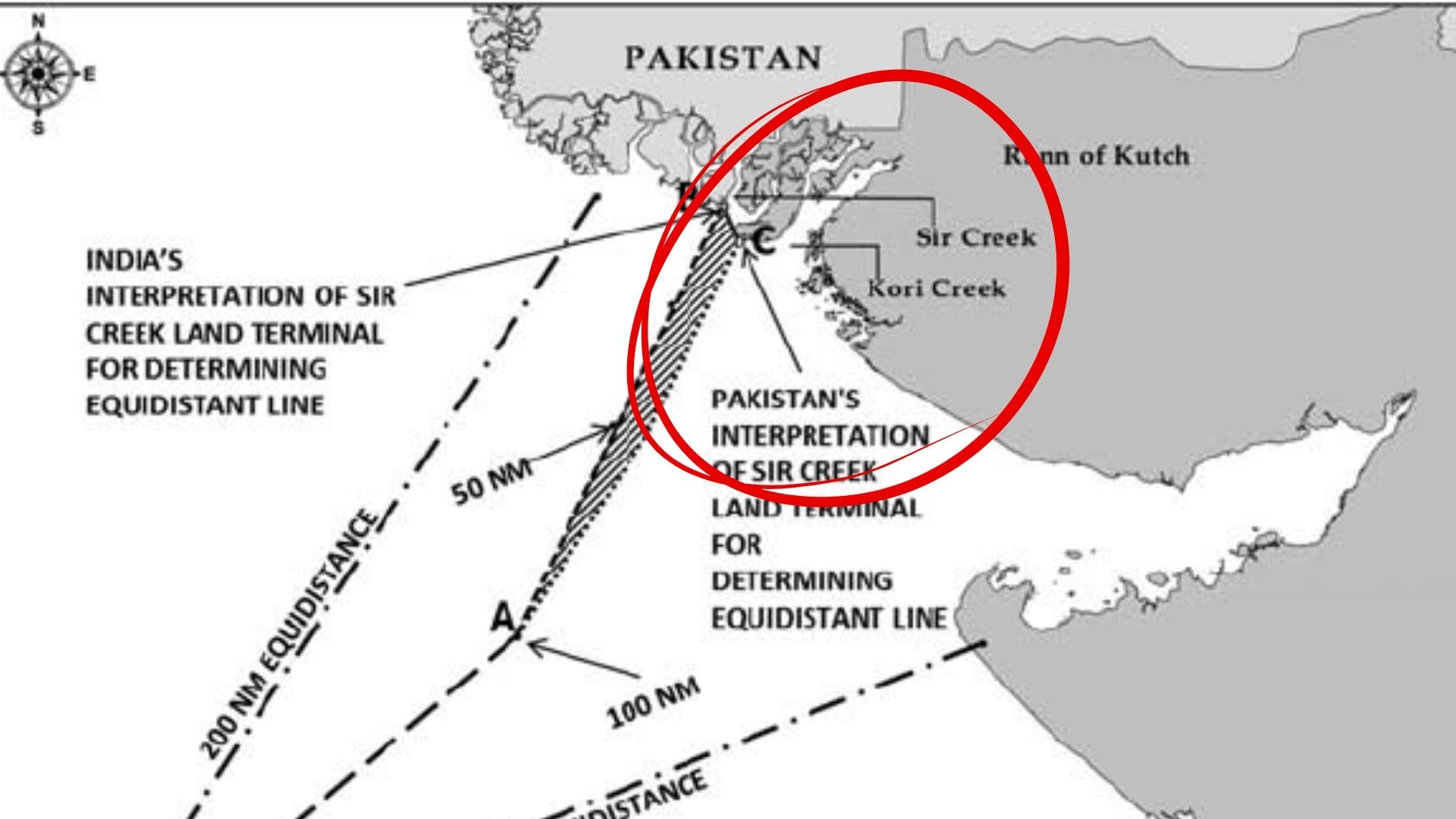
The Sir Creek border dispute between India and Pakistan is a complex territorial issue that revolves around a narrow estuary located in the Rann of Kutch region. This dispute traces back to the partition of British India in 1947, which left many unresolved territorial claims between the two newly formed nations. The crux of the disagreement lies in the interpretation of the maritime boundary in the Sir Creek area, which is crucial for both countries due to its potential resource-rich waters. The creek itself is an estuarine tidal flat, and its delineation has significant implications for territorial waters and fishing rights, making it a point of contention for both nations.
Strategically, the Sir Creek area is important not only for its natural resources but also for its geopolitical significance. Control over this region allows for greater influence over maritime navigation routes and fishing grounds in the Arabian Sea. Furthermore, the dispute is emblematic of the broader tensions between India and Pakistan, reflecting historical grievances and nationalistic fervor that have persisted since their independence. The area is not densely populated, but the geopolitical stakes are high, as it affects bilateral relations and regional stability in South Asia.
Attempts at resolving the Sir Creek dispute have been complicated by the enduring mistrust between India and Pakistan, exacerbated by other contentious issues such as Kashmir and cross-border terrorism. Various rounds of negotiations have taken place, yet a definitive resolution remains elusive. Both countries have made claims based on historical treaties and maps, but differing interpretations continue to hinder progress. The strategic importance of the creek is underscored by the fact that it is situated near vital maritime routes, making it a focal point for both nations in their quest for territorial integrity and resource control.
In conclusion, the Sir Creek border dispute is not merely a matter of territorial demarcation; it embodies the larger complexities and historical grievances that define India-Pakistan relations. As both nations continue to engage in diplomatic efforts to resolve the issue, the significance of Sir Creek remains paramount, not just for its economic potential but also as a symbol of national pride and sovereignty. The resolution of this dispute could pave the way for improved bilateral ties and greater regional cooperation, highlighting the importance of dialogue in addressing long-standing conflicts.