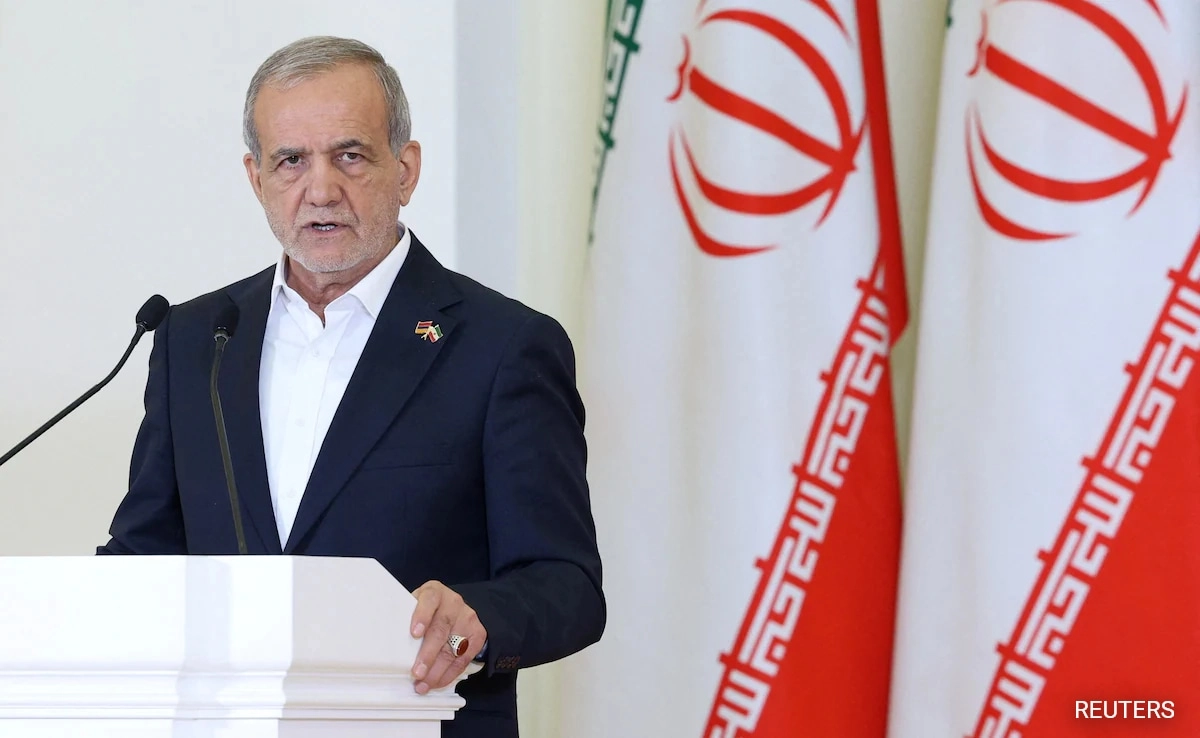
Iranian President Ebrahim Raisi has made a bold statement accusing Israel and the United States of conspiring to “divide and destroy” Iran. This assertion highlights the ongoing tensions in the region, where geopolitical rivalries often lead to complex power dynamics. Raisi’s comments come amidst a backdrop of heightened military and political maneuvering, as both Israel and the U.S. have historically viewed Iran as a significant threat to their interests in the Middle East. The Iranian leadership perceives these actions as not only a challenge to their sovereignty but also a direct attack on the nation’s unity and stability.
Raisi’s remarks also reflect the broader narrative in Iran regarding external threats and the necessity of national solidarity in the face of perceived aggression. The rhetoric underscores the Iranian government’s strategy to rally domestic support by portraying itself as a bastion against foreign intervention. This perspective is particularly resonant among the Iranian populace, who have faced economic hardships exacerbated by sanctions and military posturing from both Israel and the U.S. The framing of these nations as adversaries serves to unify various factions within Iran, emphasizing the need for resilience and national pride against external pressures.
Moreover, the historical context of U.S.-Iran relations adds further depth to Raisi’s claims. The 1979 Iranian Revolution, subsequent U.S. sanctions, and military actions in the region have cultivated a deep-seated mistrust. Israel’s concerns about Iran’s nuclear ambitions and its support for militant groups in neighboring countries have also intensified hostilities. In this light, Raisi’s statement can be viewed not only as a reaction to immediate threats but also as a continuation of Iran’s long-standing narrative of resistance against perceived imperialistic endeavors.
As the geopolitical landscape continues to shift, the statements from Iranian leadership serve as both a warning and a call to action for their citizens. The emphasis on unity and resilience against external pressures is a recurring theme in Iranian politics, especially in times of crisis. The situation remains precarious, as any miscalculation or escalation could have far-reaching consequences for regional stability. Ultimately, Raisi’s comments encapsulate the complex interplay of national identity, security, and foreign influence that defines Iran’s current trajectory in a tumultuous Middle Eastern context.