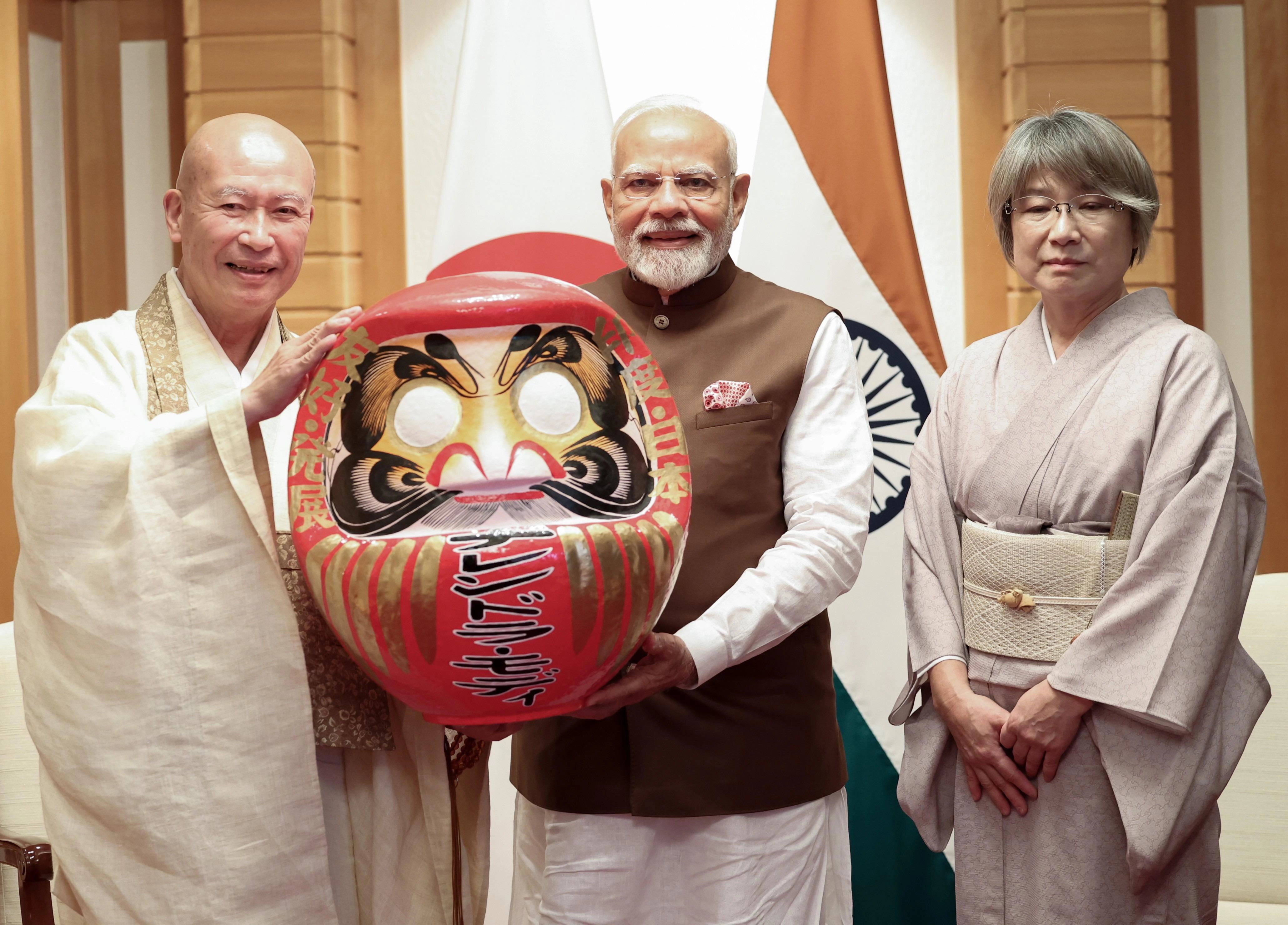
During his recent visit to Japan, Prime Minister Narendra Modi was presented with a traditional Daruma doll, an iconic symbol deeply rooted in Japanese culture. The Daruma doll, often associated with perseverance and good luck, is modeled after Bodhidharma, the founder of Zen Buddhism. Typically made from papier-mâché, these dolls are hollow, round, and weighted at the bottom, allowing them to return to an upright position when tilted. This unique design represents resilience and the idea of getting back up after facing challenges, making it a fitting gift for a leader engaged in the complex dynamics of international relations.
The Daruma doll holds significant meaning beyond its physical appearance. Each doll comes with blank eyes, traditionally emphasizing the importance of setting goals. Upon making a wish or setting an objective, the owner fills in one eye. Once the goal is achieved, the other eye is filled in, symbolizing the realization of aspirations. This cultural practice resonates with the ethos of determination and hope, qualities that are particularly relevant in today’s fast-paced world, where countries and leaders strive to overcome obstacles and foster cooperation.
Prime Minister Modi’s reception of the Daruma doll can be viewed as a gesture of goodwill and mutual respect between India and Japan. This exchange highlights the shared values and cultural ties that bind the two nations, emphasizing their commitment to strengthening diplomatic and economic partnerships. As Modi embarks on this journey, the Daruma serves not only as a token of friendship but also as a reminder of the resilience required to navigate the complexities of global governance. Overall, the gift encapsulates the spirit of perseverance and collaboration that both countries aim to embody in their ongoing relationship.