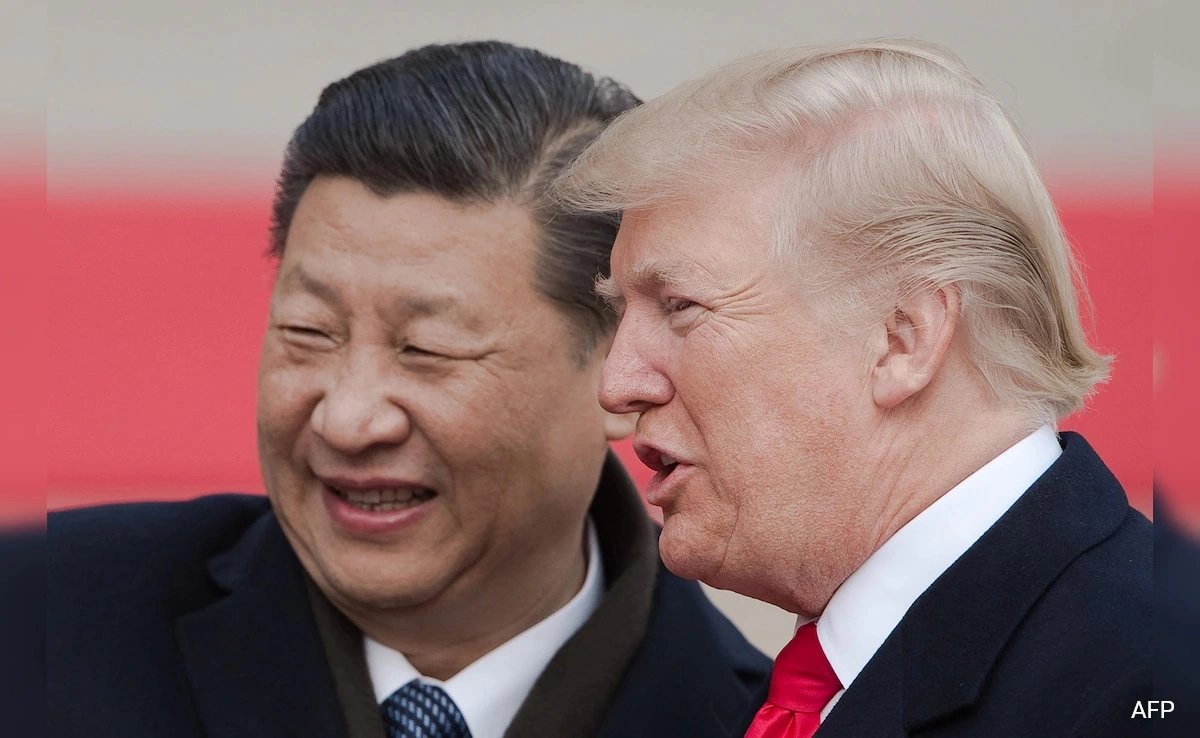
In a recent statement, former President Donald Trump expressed his views on the ongoing tensions between China and Taiwan, highlighting his belief that China, under the leadership of President Xi Jinping, is adopting a patient approach regarding the Taiwan issue. Trump emphasized that he does not foresee a military invasion of Taiwan during his presidency, should he be elected for another term. This assertion reflects his broader perspective on international relations, particularly in the context of U.S.-China dynamics, where he believes that strategic diplomacy can play a crucial role in maintaining peace and stability in the region.
Trump’s comments underscore a significant aspect of his foreign policy philosophy, which often revolves around negotiating from a position of strength. He has previously characterized Xi as a formidable leader, suggesting that the Chinese government is likely to pursue its objectives through non-military means for the time being. This assertion could be viewed as an attempt to project confidence in his administration’s ability to manage complex geopolitical challenges while also reassuring allies and constituents about the state of U.S. foreign policy in the Asia-Pacific region.
Furthermore, Trump’s remarks come at a time of heightened scrutiny regarding U.S.-China relations, with various analysts and experts weighing in on the potential for conflict over Taiwan. The island has long been a flashpoint in Sino-American relations, and any military action by China could have profound implications for regional security and global trade. By asserting that Xi is unlikely to take aggressive action during his presidency, Trump aims to alleviate some of the fears surrounding an imminent conflict, indicating his belief that a diplomatic approach is still viable.
In the broader context, Trump’s statement reflects ongoing debates within the U.S. about how to handle China’s rise and its ambitions regarding Taiwan. As the geopolitical landscape continues to evolve, the strategy of patience may be tested, particularly as both nations navigate the complexities of trade, technology, and military presence in the Indo-Pacific. Ultimately, Trump’s perspective serves as a reminder of the intricate balance that must be maintained in international relations, where the possibility of conflict must be managed alongside the pursuit of diplomatic solutions.