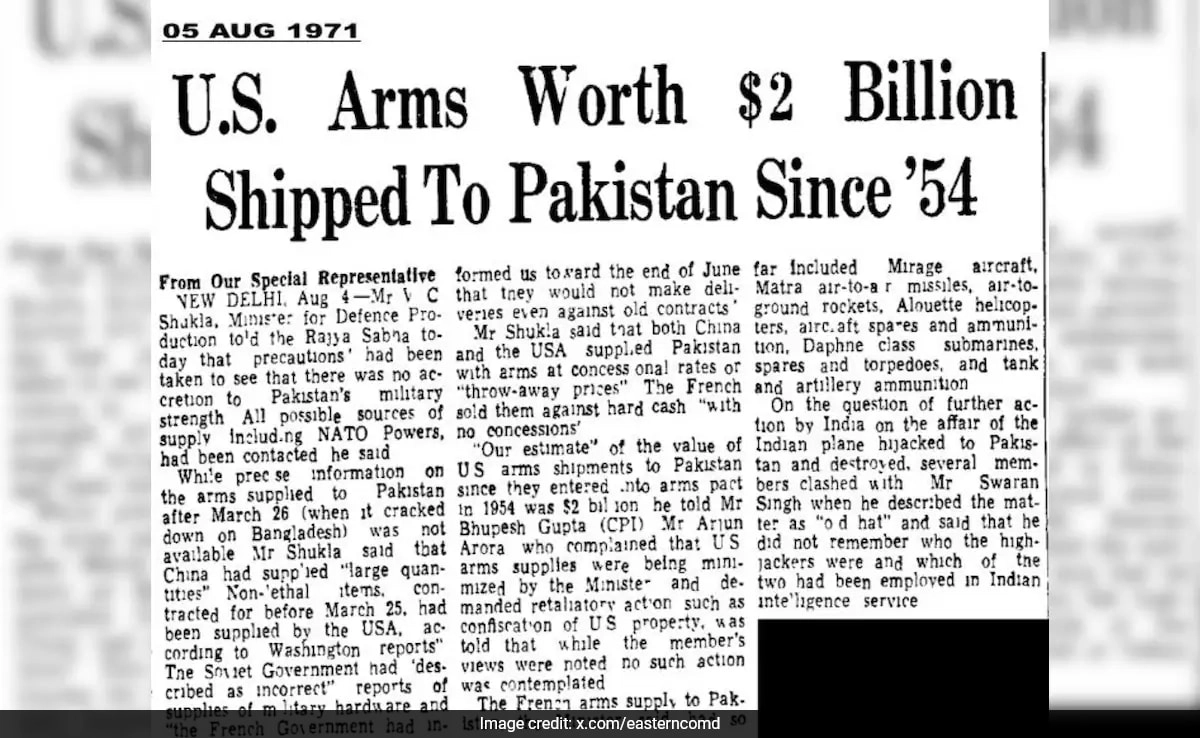
In a significant event from 1971, the Indian Army made headlines with a newspaper post that served as a pointed critique of the United States’ support for Pakistan during the Bangladesh Liberation War. This period was marked by intense geopolitical tensions, with India and Pakistan on opposing sides of a humanitarian and military conflict. The US, under President Richard Nixon, was perceived as favoring Pakistan, which was receiving military and diplomatic support at a time when its actions in East Pakistan were drawing international condemnation. The Indian Army’s newspaper post not only highlighted this disparity but also emphasized the moral and ethical implications of international alliances during times of crisis.
The post articulated the frustrations of the Indian forces and the broader Indian populace, who were witnessing the suffering of millions of Bengalis amidst a brutal crackdown by the Pakistani military. The Indian Army’s message resonated with a sense of justice and the urgency to protect human rights. It underscored India’s commitment to supporting the liberation of Bangladesh, a cause that was gaining international traction as reports of atrocities surfaced. By publicly addressing the US’s stance, the Indian Army aimed to rally domestic and international support for its position, countering the narrative that the US was promoting by siding with Pakistan.
This bold statement from the Indian Army against a superpower like the United States reflected the complexities of Cold War politics and the shifting alliances that characterized the era. It demonstrated India’s willingness to assert its sovereignty and moral stance on the global stage, even in the face of formidable opposition. The 1971 conflict ultimately culminated in the independence of Bangladesh, but the Indian Army’s message lingered as a testament to the power of public discourse in shaping international relations. The episode serves as a reminder of how military institutions can engage in political commentary and influence the narrative during critical historical moments.