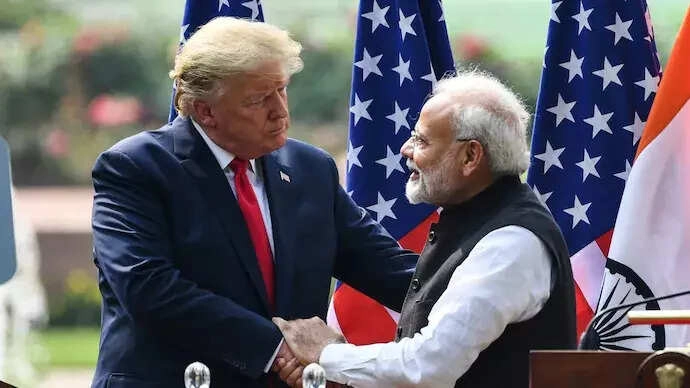
In the realm of international trade, U.S. President Donald Trump’s remarks regarding India have undergone a notable evolution. Initially referring to himself as the “Tariff King,” Trump frequently emphasized his administration’s aggressive trade policies, notably against countries he deemed as taking advantage of the United States. His administration implemented tariffs on a range of goods, aiming to protect American industries and reduce the trade deficit. When it came to India, Trump often highlighted the disparities in trade practices, expressing frustration over what he perceived as unfair tariffs imposed by the Indian government on American products. This stance resonated with his base as he painted a picture of a tough negotiator willing to confront global partners on trade imbalances.
However, in a surprising shift, Trump later embraced the moniker “Big Charger” in reference to his trade discussions with India. This change signifies a more collaborative approach, suggesting an eagerness to engage with India on trade issues rather than solely focusing on confrontation. The term “Big Charger” implies a readiness to charge forward, fostering a relationship that could potentially yield beneficial outcomes for both nations. Trump’s comments indicate an acknowledgment of India’s growing economic significance and an understanding that a cooperative relationship could lead to mutual benefits in various sectors, including technology, defense, and agriculture.
The transition from “Tariff King” to “Big Charger” reflects a broader strategy of balancing assertiveness with diplomacy. By highlighting the need for fair trade while also expressing a willingness to work alongside India, Trump aims to create an environment conducive to negotiations. This dual approach could prove vital in addressing longstanding trade issues, such as tariffs on agricultural products and market access for American companies. Ultimately, Trump’s comments encapsulate a dynamic shift in U.S.-India trade relations, emphasizing the importance of dialogue and partnership in navigating the complexities of global commerce. The evolving narrative suggests that while confrontation may be necessary at times, collaboration may offer a more sustainable path forward in fostering economic ties between the two nations.