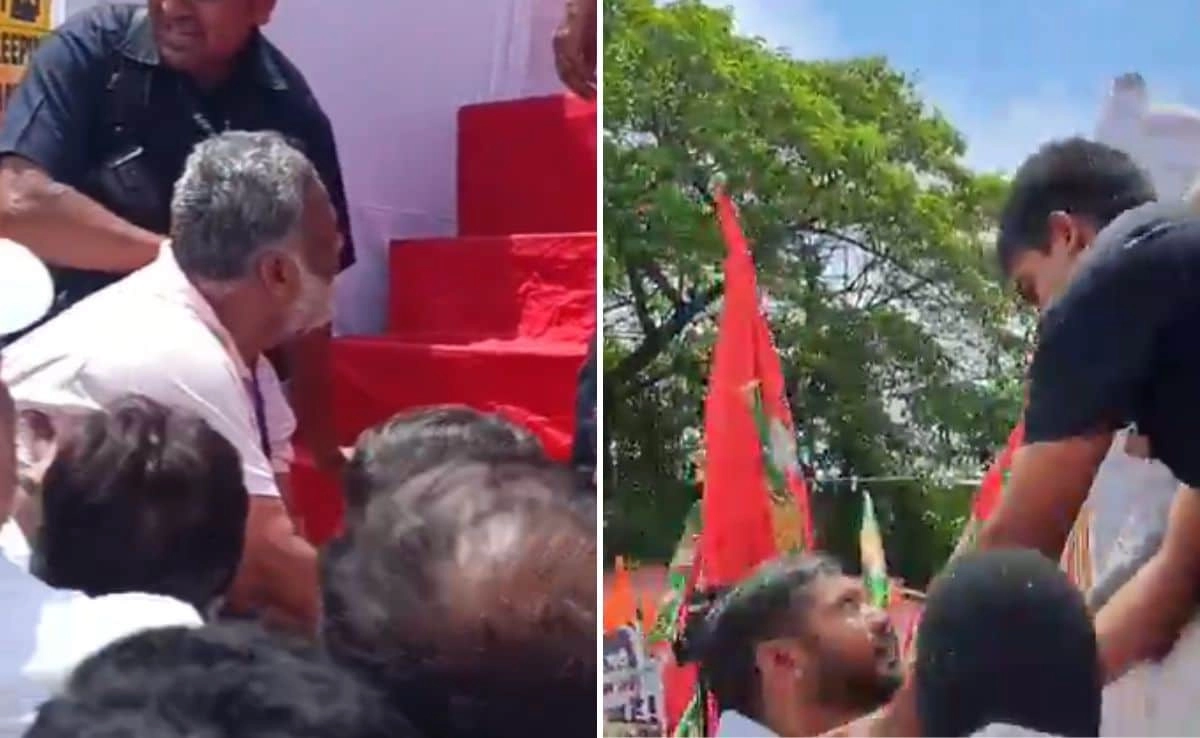
In a recent political event that garnered significant attention, Pappu Yadav and Kanhaiya Kumar were reportedly stopped from boarding a van alongside Rahul Gandhi. This incident unfolded during a time of heightened political activity and illustrates the ongoing tensions within the Indian political landscape. Pappu Yadav, a prominent figure known for his outspoken nature and controversial statements, has been a vocal critic of the current political regime. On the other hand, Kanhaiya Kumar, a former student leader and a rising star in leftist politics, has also been actively engaged in mobilizing youth support against various governmental policies.
The circumstances surrounding the van incident raise questions about political freedom and the extent to which authorities may go to control political narratives. As both Yadav and Kumar attempted to join Rahul Gandhi, a senior leader of the Indian National Congress and a key opposition figure, their obstruction was seen as a move to stifle dissent. This situation reflects broader issues of political censorship and the challenges faced by opposition parties in India. With the general election approaching, the dynamics between these leaders and the ruling party are likely to intensify, further complicating the political fabric of the nation.
Moreover, the incident also highlights the importance of unity among opposition leaders, especially in a scenario where they face common challenges from the ruling party. The collaboration among figures like Yadav, Kumar, and Gandhi symbolizes a potential coalition aimed at countering the influence of the current government. However, their efforts are often met with resistance, as seen in this incident. Political analysts suggest that such confrontations can galvanize public support for the opposition, as citizens become more aware of the attempts to suppress political expression.
In summary, the event where Pappu Yadav and Kanhaiya Kumar were stopped from boarding the van with Rahul Gandhi serves as a microcosm of the larger political struggles in India. It underscores the complexities of political alliances and the ongoing battle for democratic rights. As the nation moves closer to elections, the implications of such incidents will likely resonate with voters, influencing their perceptions of both the opposition and the ruling party. The coming weeks and months will be crucial in determining how these dynamics unfold and what they mean for the future of Indian politics.