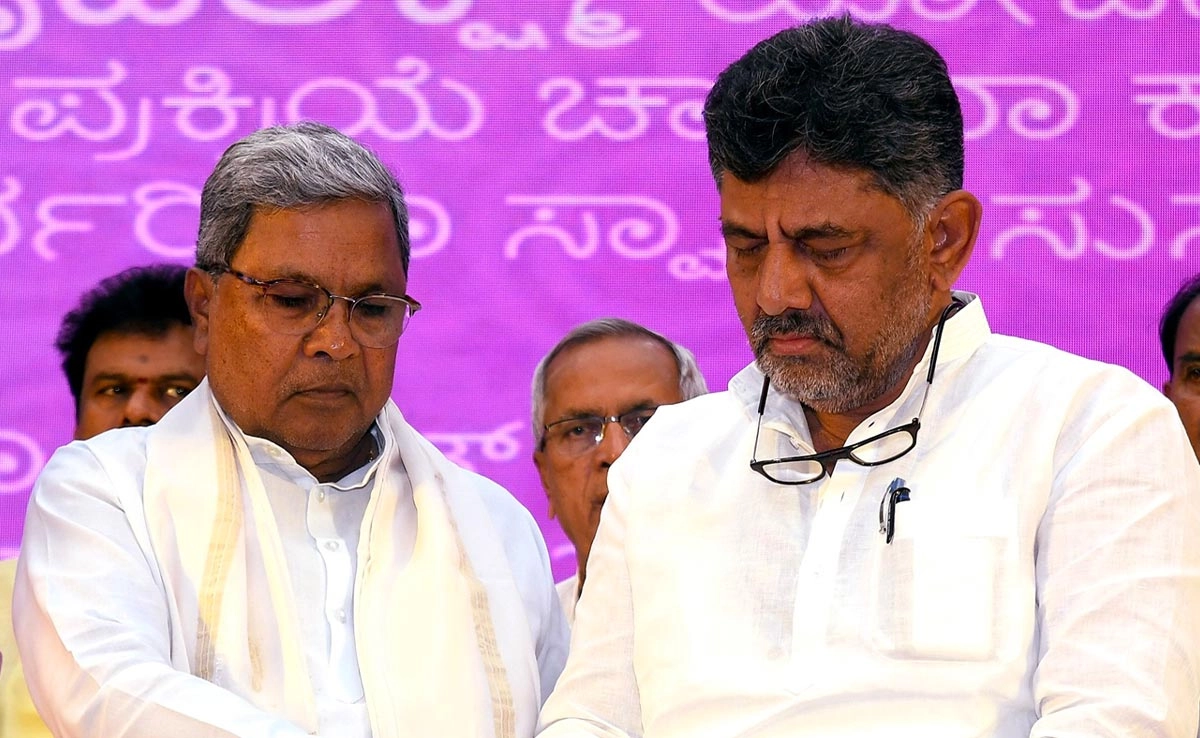
The political landscape in Karnataka has become increasingly dynamic with the ongoing showdown between two prominent leaders, Siddaramaiah and DK Shivakumar. Both politicians, representing the Indian National Congress, have been pivotal in shaping the party’s strategies and responses to various challenges in the state. Siddaramaiah, a seasoned politician and former Chief Minister, is known for his experience and grassroots connection. In contrast, DK Shivakumar, the current Karnataka Congress president, is recognized for his organizational skills and ability to galvanize support among party workers. The interplay between their leadership styles and political ambitions has created a complex scenario within the Congress party, raising questions about who truly holds the cards in this high-stakes political game.
As the Congress party aims to consolidate its position in Karnataka, the rivalry between Siddaramaiah and Shivakumar has intensified. Each leader has a significant support base, and their contrasting approaches to governance and party dynamics have led to a tug-of-war for influence. Siddaramaiah’s legacy of implementing welfare schemes and his experience in navigating the political arena make him a formidable contender. Meanwhile, Shivakumar’s adeptness at mobilizing resources and his reputation as a pragmatic leader bolster his position within the party hierarchy. The power struggle is not merely about personal ambition; it reflects broader ideological differences and differing visions for Karnataka’s future.
The stakes are further raised as the state approaches crucial elections, prompting both leaders to strategize and build alliances. The outcome of this internal rivalry may well determine the Congress party’s ability to present a united front against its political adversaries, particularly the Bharatiya Janata Party (BJP), which has been making inroads in Karnataka. As Siddaramaiah and Shivakumar navigate this complex political landscape, their ability to collaborate or compete will significantly influence the party’s electoral prospects. Observers are watching closely to see how this power dynamic unfolds, as it could shape not only the future of the Congress party in Karnataka but also the broader political narrative in India.
In this context, the question of who holds the cards becomes crucial. Political analysts suggest that the answer may lie in the ability of either leader to effectively communicate their vision and rally support from the party cadre and the electorate. The Congress party’s internal cohesion is vital for mounting a strong challenge against the BJP, which has been capitalizing on any signs of discord within the opposition. Ultimately, the resolution of this leadership tussle will play a decisive role in shaping Karnataka’s political narrative, impacting not only the Congress party’s fortunes but also the state’s governance and development trajectory in the years to come. As the drama unfolds, the political acumen of Siddaramaiah and DK Shivakumar will be tested, with the implications resonating far beyond the borders of Karnataka.