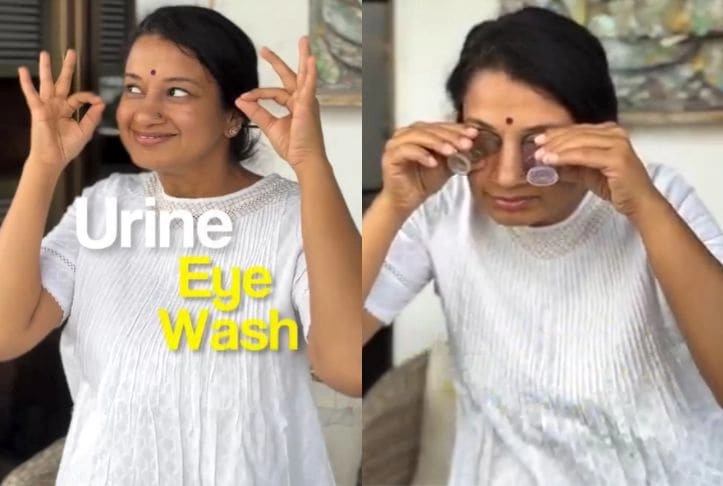
In a bizarre incident that has captured the attention of social media users, a woman from Pune has sparked outrage and concern after posting a video of herself washing her eyes with urine. The clip, intended for a social media reel, has been met with a wave of criticism and disbelief from viewers, many of whom have expressed their shock and disapproval. While the intention behind the video might have been to create a sensational or humorous piece of content, the reaction from the online community has been overwhelmingly negative, with many urging the woman to seek help.
The act of using urine in this manner has raised serious questions about health and safety. Urine therapy, which some alternative medicine proponents advocate, is not widely accepted by the medical community. Experts warn that applying urine to the eyes can lead to infections or other complications, emphasizing the importance of using scientifically-backed methods for eye care. The woman’s choice to engage in such a dangerous practice for the sake of internet fame has not only put her health at risk but has also sparked discussions about the lengths to which individuals will go to gain attention in the digital age.
As the video continues to circulate online, it has become a topic of debate regarding the influence of social media on behavior and decision-making. Many commentators have pointed out that the pursuit of likes and shares can sometimes blur the lines of common sense and self-care. The incident serves as a cautionary tale, highlighting the potential consequences of prioritizing online fame over personal well-being. In a world where social media trends can quickly spiral out of control, it is crucial for users to engage in responsible content creation and consumption.
In the aftermath of the video’s release, mental health advocates have also chimed in, urging individuals who engage in such risky behavior to reflect on their motivations and the potential ramifications. The overwhelming response from the internet community has been a reminder that there is a collective responsibility to promote healthy practices rather than harmful ones. As the woman faces backlash and calls for action, this incident serves as a stark reminder of the sometimes perilous intersection between social media culture and personal health.