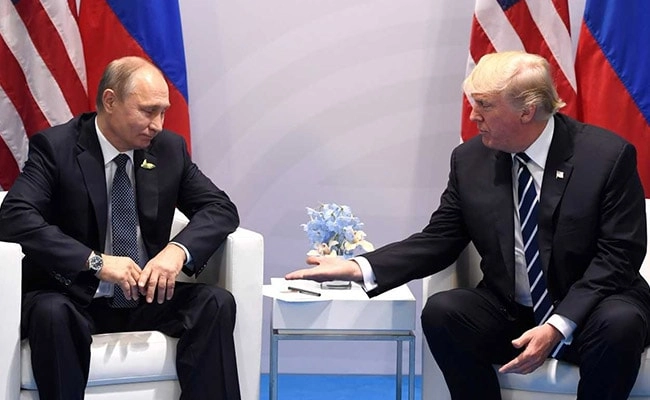
Former President Donald Trump reportedly expressed his belief to European leaders that Russian President Vladimir Putin is unlikely to achieve victory in the ongoing war in Ukraine. This revelation emerges from a recent report that highlights Trump’s private conversations during his presidency. According to sources, Trump conveyed skepticism about Russia’s military capabilities and strategic position in Ukraine, suggesting that despite the prolonged conflict, Putin would struggle to secure a definitive win. This assertion reflects a notable shift from the public rhetoric surrounding the war, where concerns about Russian aggression and territorial ambitions have dominated discussions.
Trump’s perspective on the situation in Ukraine raises questions about his administration’s foreign policy approach and its implications for U.S.-European relations. While his administration faced criticism for its handling of various international issues, Trump’s private insights may have provided European leaders with a different lens through which to view the conflict. By downplaying Putin’s prospects for victory, Trump appeared to offer a more optimistic outlook, potentially influencing how allied nations strategized their responses to the war. This viewpoint, while controversial, underscores the complexities of geopolitical dynamics and the varying interpretations of power and influence on the global stage.
The ongoing war in Ukraine has significantly impacted international relations, with Western nations rallying to support Kyiv in its defense against Russian aggression. Trump’s comments add another layer to the discourse, highlighting the divergent views among political leaders regarding the conflict’s trajectory. As Europe continues to grapple with the consequences of the war, including economic sanctions and energy supply concerns, the differing narratives about Putin’s capabilities may shape future policy decisions. Ultimately, the implications of Trump’s assessments could resonate well beyond his presidency, influencing how current and future leaders approach their alliances and strategic partnerships in the face of evolving global challenges.