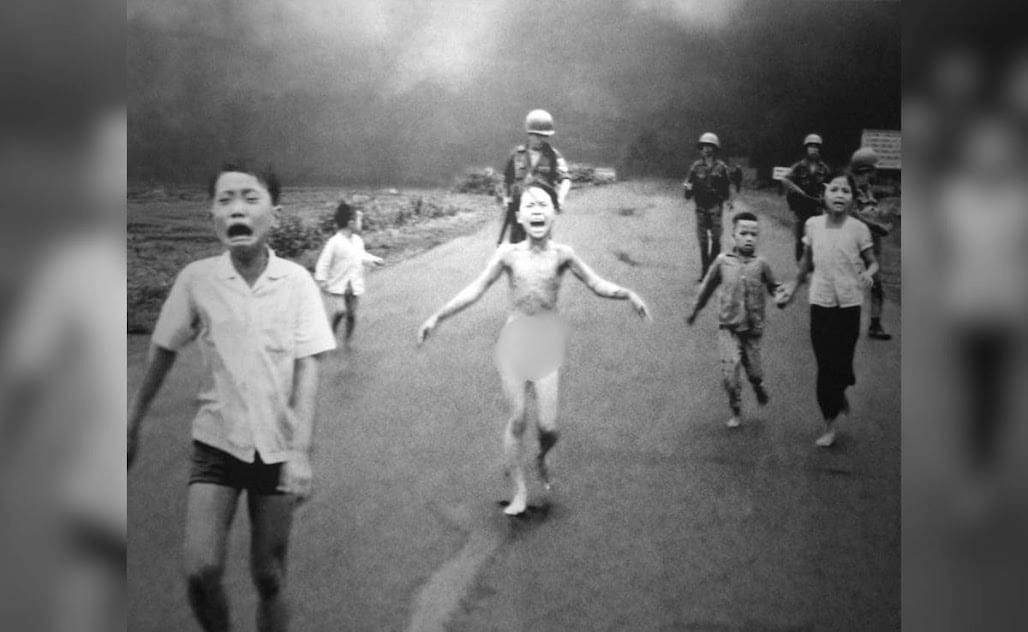
The iconic image known as “Napalm Girl,” which captures the harrowing aftermath of a Vietnam War attack, has been a powerful symbol of the horrors of war since it was first published in 1972. The photograph, taken by photographer Nick Ut, depicts a young girl, Kim Phuc, running away from a napalm explosion, her skin severely burned and her expression one of sheer terror. Over the years, this poignant image has sparked discussions about the ethics of war photography, the impact of visual media on public perception, and the responsibility of photographers in capturing and disseminating such distressing content. Recently, the World Press Photo Foundation announced a temporary suspension of credit for the image, igniting renewed debate about the representation of trauma in media.
The decision to pause credit for “Napalm Girl” was not made lightly. It reflects ongoing conversations within the journalistic community regarding authenticity, consent, and the portrayal of vulnerable subjects. As the world evolves, so too do the standards and expectations surrounding the ethical implications of graphic imagery. Critics argue that the image has been frequently appropriated without proper context or acknowledgment of its historical significance, leading to a potential dilution of its impact. The World Press Photo Foundation’s move serves as a reminder of the importance of recognizing and honoring the stories behind such powerful photographs, as well as the need for sensitivity when sharing these images in contemporary media.
Moreover, this pause in credit raises questions about the role of institutions in managing the legacy of photojournalism. The World Press Photo Foundation aims to ensure that iconic images are not only celebrated for their artistic merit but also respected for the real-life traumas they depict. By taking a step back, the foundation hopes to encourage more thoughtful discussions about the responsibilities of those who capture and share images of suffering. As society grapples with the consequences of war and conflict, it becomes imperative to reflect on how these images shape collective memory and influence societal attitudes towards violence and humanitarian crises.
In this context, the pause in credit for “Napalm Girl” serves as a call to action for the media and the public alike to engage in deeper conversations about the ethics of representation. It challenges photographers, editors, and audiences to consider the narratives they are perpetuating and the historical contexts that inform their understanding of such images. Ultimately, while “Napalm Girl” remains a vital part of our visual history, the ongoing discussions surrounding its representation underscore the necessity for a more nuanced approach to the ethics of photojournalism in an increasingly complex world.