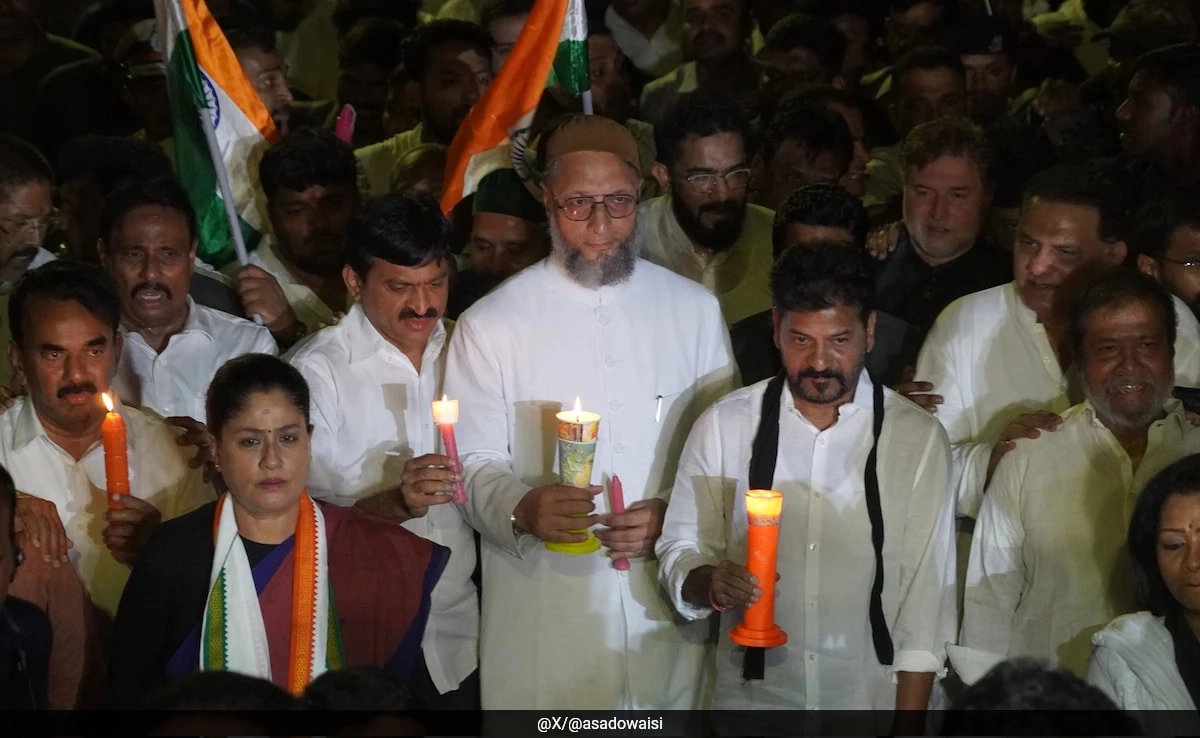
In a recent statement addressing Prime Minister Narendra Modi, Revanth Reddy, a prominent Indian political leader, made headlines by emphasizing the need for a strong response to the ongoing security challenges in Jammu and Kashmir (J&K). Reddy’s remarks came in the wake of a significant attack in the region, which has once again highlighted the urgency of addressing the persistent issues surrounding terrorism and national security. His bold assertion that the Indian government should consider even the drastic measure of merging Pakistan-occupied Kashmir (PoK) into India underscores the gravity with which he views the current situation.
Reddy’s call to action reflects a growing sentiment among certain political factions that India must take a more aggressive stance against threats to its sovereignty. By advocating for the integration of PoK, he not only seeks to bolster national security but also to unify the territory that has been a point of contention between India and Pakistan for decades. This proposal, while contentious, signals a shift towards more assertive political discourse regarding Kashmir, urging the government to adopt a more decisive approach in dealing with cross-border terrorism. The implications of such a move would be profound, potentially altering the geopolitical landscape in South Asia.
Moreover, Reddy’s comments resonate with a broader narrative among Indian leaders who believe that a firm stand is necessary to deter future attacks and secure peace in the long-disputed region. The recent attack in J&K serves as a reminder of the persistent threats posed by militant groups, and Reddy’s statement reflects a frustration with the current policy measures that have been perceived as insufficient. His remarks aim to galvanize public support for a more robust military and diplomatic strategy, calling on the government to prioritize national interests over diplomatic niceties in dealing with Pakistan.
As discussions around Kashmir continue to evolve, Reddy’s stance may influence not only public opinion but also the government’s approach. The merging of PoK into India, while a contentious issue, raises critical questions about national integrity, security policy, and the future of India-Pakistan relations. As the political landscape shifts, it remains to be seen how the central government will respond to such proposals and whether they will lead to a reevaluation of India’s strategies in dealing with Kashmir and its neighboring adversaries. The call for a decisive stance could shape the discourse around national security in India, especially in the context of ongoing challenges in J&K.