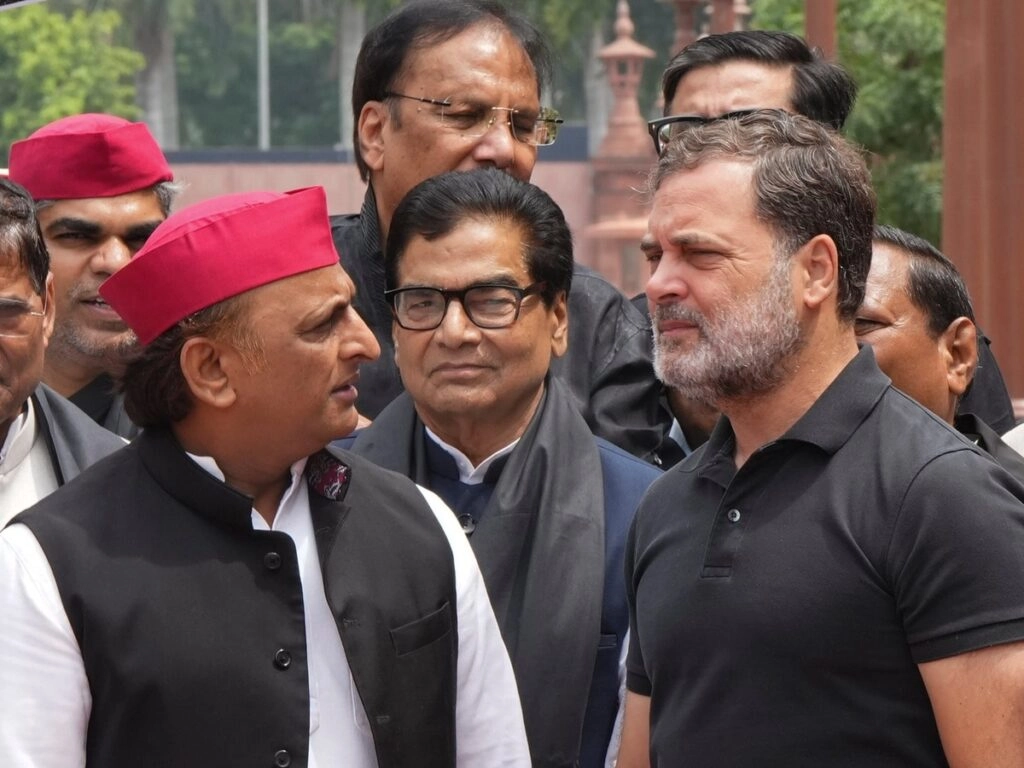
The political landscape in India is witnessing heightened tensions between the Samajwadi Party (SP) and the Congress party, particularly within the context of the Lok Sabha. Recently, Akhilesh Yadav, the leader of the SP, publicly criticized the Congress party’s collaboration with the Bharatiya Janata Party (BJP). This alliance has raised eyebrows and sparked a significant debate among political observers and party supporters alike. Yadav’s remarks suggest that he perceives this agreement as a betrayal of the core values that both parties traditionally espoused, particularly in the realm of secularism and social justice.
Yadav’s concerns center around the implications of such an alliance for the opposition’s unity against the ruling BJP. He emphasized that the Congress’s decision to engage with the BJP could undermine the collective efforts required to challenge the current government’s policies. This criticism has not only created ripples within the Lok Sabha but has also intensified the discourse on the effectiveness of opposition alliances in Indian politics. The SP leader’s assertions highlight a growing rift between the two parties, which could have far-reaching consequences for their electoral strategies and alliances as they prepare for upcoming elections.
The friction between the SP and Congress reflects broader trends in Indian politics, where alliances and coalitions are often fluid and subject to rapid changes based on political expediency. Yadav’s public questioning of Congress’s motives could potentially alienate voters who are looking for a united front against the BJP. As the political climate evolves, it will be crucial for both parties to navigate these tensions carefully, balancing their individual agendas with the necessity of collaboration to present a formidable opposition. This situation underscores the challenges faced by regional parties in forging effective partnerships with national parties, especially in an increasingly polarized political environment.