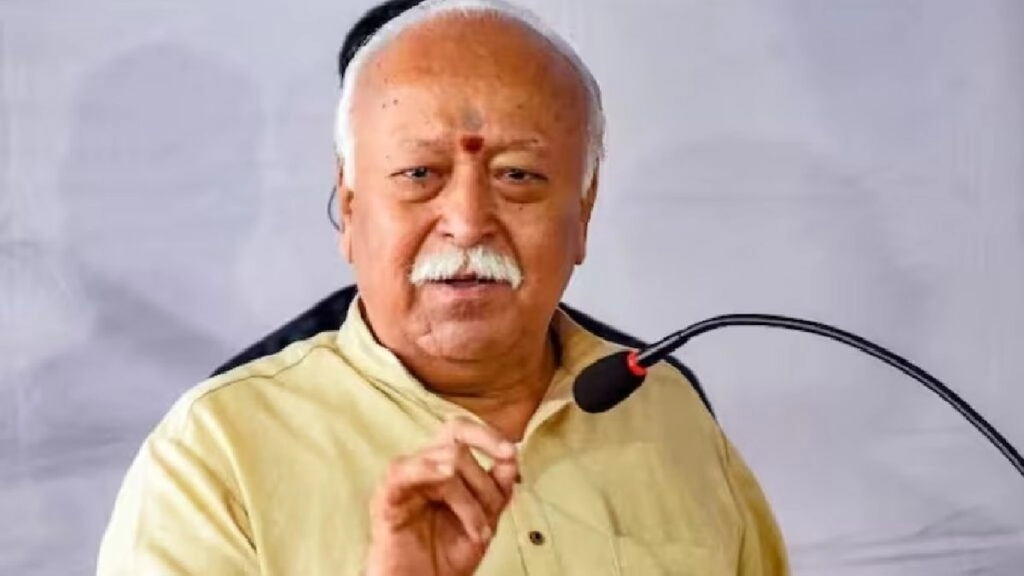
Mohan Bhagwat, the Chief of the Rashtriya Swayamsevak Sangh (RSS), recently expressed his support for those who migrated to India from Pakistan following the partition in 1947. He emphasized that these individuals should be regarded as warriors rather than mere refugees. This statement highlights a significant perspective on the historical context of the partition, which led to one of the largest human migrations in history. Bhagwat’s remarks aim to acknowledge the resilience and courage of those who left their homes and communities amid the chaos and violence that ensued during that tumultuous period.
By framing these migrants as warriors, Bhagwat seeks to honor their struggle for survival and their contribution to the nation-building process in India. This characterization challenges the common perception of refugees as passive victims and instead positions them as active participants in the nation’s history. His comments may resonate with many who view the partition not just as a tragic event but also as a testament to the human spirit’s ability to endure and fight for a better future.
Furthermore, Bhagwat’s statements reflect a broader discourse on identity, belonging, and the narratives surrounding migration in India. As the country continues to grapple with issues of citizenship and the rights of those who have historically faced displacement, his remarks could serve as a call to recognize and honor the sacrifices made by these individuals. By reinforcing the idea that they are warriors, he encourages a sense of pride and unity among those who came to India during such challenging times, thereby fostering a more inclusive narrative in the ongoing dialogue about India’s diverse population.
In summary, Mohan Bhagwat’s assertion that migrants from Pakistan after the partition are warriors underscores the need to reframe historical narratives surrounding migration and displacement. It opens up a discussion about the resilience and agency of individuals who faced immense challenges in their quest for safety and belonging. This perspective not only honors their legacy but also invites a deeper understanding of the complexities of national identity in a multicultural society like India.