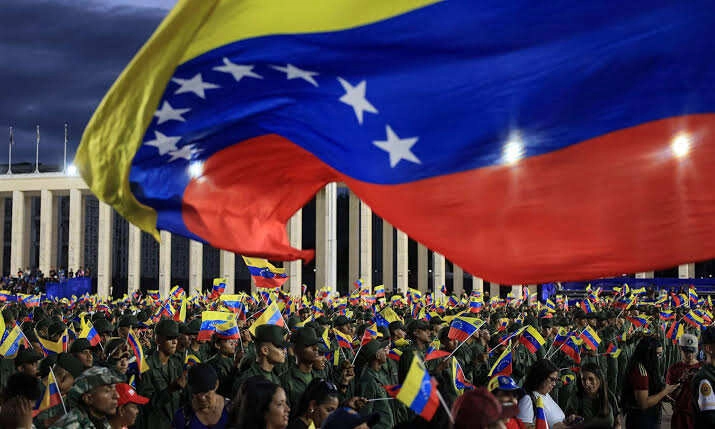
Venezuela is currently facing a dual crisis: a political power struggle and a recent earthquake that has shaken the region. The political turmoil in the country has been ongoing for several years, characterized by severe economic mismanagement, hyperinflation, and widespread poverty. The government, led by Nicolás Maduro, has faced significant opposition, leading to a polarized environment where the legitimacy of the regime is frequently challenged. This instability has not only affected the daily lives of Venezuelans but has also had profound implications for the country’s oil sector, which is vital to its economy.
The recent earthquake adds another layer of complexity to Venezuela’s already precarious situation. Earthquakes can cause substantial damage to infrastructure, and in a country struggling with political and economic crises, this can exacerbate existing challenges. The oil industry, which is the backbone of Venezuela’s economy, could be significantly impacted. Damage to refineries, pipelines, and other facilities could disrupt production and exports, leading to a further decline in revenue for a country that is already facing severe financial difficulties.
Moreover, the global oil market could also feel the effects of this dual crisis. Venezuela has some of the largest oil reserves in the world, and any disruption in its production can lead to fluctuations in oil prices internationally. If the earthquake leads to a reduction in output, it could create a ripple effect, prompting other oil-producing nations to adjust their production levels in response to changing market dynamics. As investors and analysts closely monitor the situation, the interplay between Venezuela’s internal struggles and the global oil market will be crucial in determining future trends in oil prices and availability.