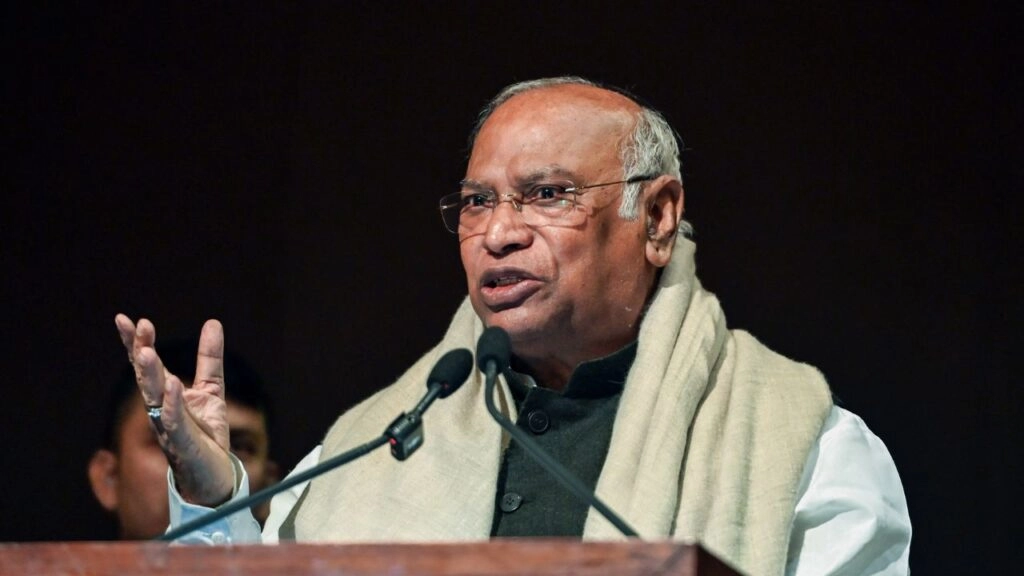
The Bharatiya Janata Party (BJP) has leveled serious allegations against the Kharge family, claiming that they engaged in corrupt practices involving the embezzlement of land valued at approximately Rs 100 crore. This accusation has sparked significant political controversy, drawing attention to the broader issues of corruption and accountability within political families. The BJP’s claims suggest that the Kharge family, which has been prominent in Karnataka’s political landscape, may have exploited their influence and power for personal gain.
The allegations have emerged as part of a larger narrative where opposition parties often scrutinize each other’s financial dealings and land acquisitions. The BJP’s assertions come at a time when the public is increasingly concerned about transparency in governance and the ethical conduct of elected representatives. By bringing such accusations to the forefront, the BJP aims to position itself as a party committed to rooting out corruption, particularly among rival political factions.
In response to these claims, the Kharge family has vehemently denied any wrongdoing, asserting that the accusations are politically motivated and intended to tarnish their reputation. They argue that these allegations are part of a broader strategy by the BJP to distract voters from their governance issues and failures. This ongoing political tussle underscores the intense rivalry between the BJP and the Congress party, of which the Kharge family is a significant part.
As the situation unfolds, it highlights the need for thorough investigations into the allegations to ensure accountability. The public’s trust in political institutions is crucial, and allegations of corruption can have lasting impacts on the political landscape. Whether these claims will lead to legal action or further political fallout remains to be seen, but they certainly contribute to the ongoing dialogue about integrity and ethical governance in India.