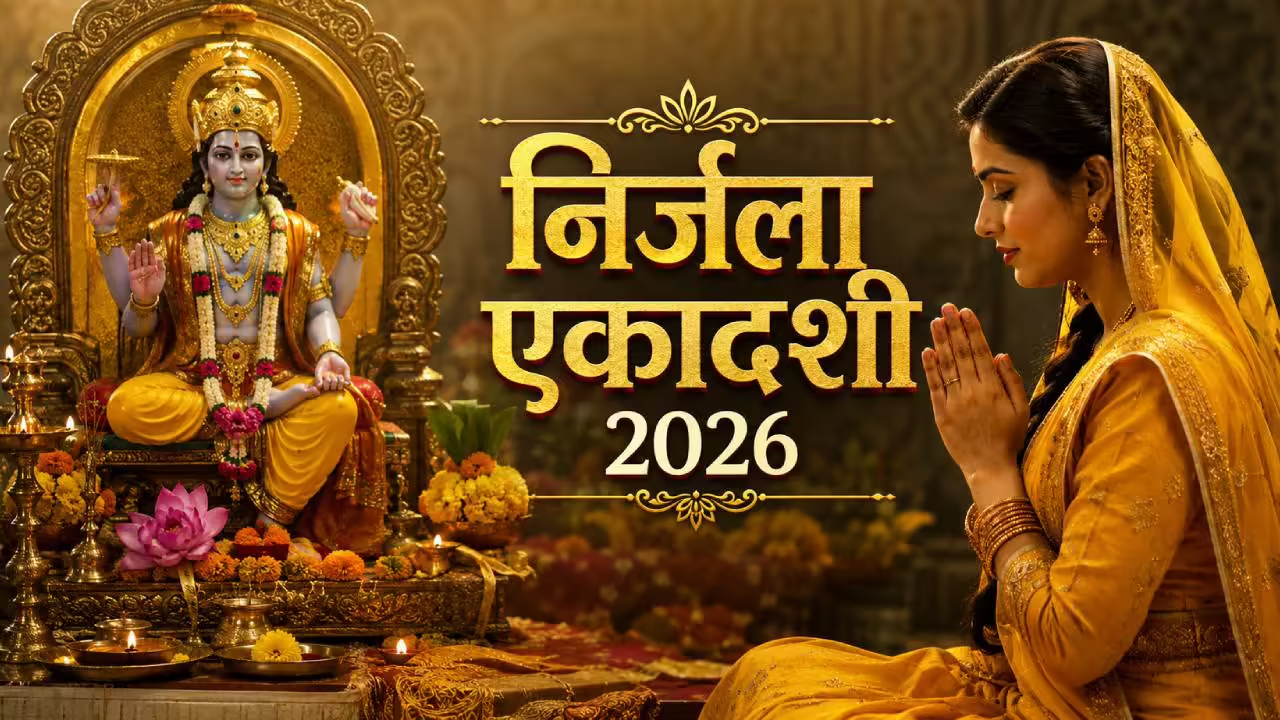
Nirjala Ekadashi, a significant fasting day for devotees of Lord Vishnu, will take place in 2026 while under the influence of Bhadra, an astrological alignment that often raises questions about the auspiciousness of rituals performed during this time. Observed on the 11th day of the waxing moon in the month of Jyeshtha, Nirjala Ekadashi is particularly revered as it combines the benefits of all Ekadashi fasts, hence its popularity among practitioners. However, the presence of Bhadra during this Ekadashi might lead many to wonder if it will affect the effectiveness of their prayers and fasting.
Bhadra is considered a period that can bring about obstacles in performing religious duties, leading to concerns about whether devotees should proceed with their rituals or postpone them for a later date. Generally, it is believed that fasting during Bhadra can be less beneficial, but many devotees may choose to observe the fast regardless of the astrological condition, believing that their devotion will outweigh any negative influences. The essence of Nirjala Ekadashi lies in the purity of intention and the depth of devotion, and many will argue that the spiritual benefits of fasting and prayer are not diminished by external factors.
For those looking to perform rituals on this day, it is essential to be aware of the auspicious time, or ‘shubh muhurat,’ for worship. In 2026, this will be particularly crucial due to the presence of Bhadra. Devotees are encouraged to consult a reliable Hindu calendar or an astrologer to determine the best time for conducting their prayers and offerings. Ultimately, Nirjala Ekadashi is a day meant for deep reflection, devotion, and connection with the divine, and despite the complexities posed by astrological conditions, the core purpose remains unchanged: to seek blessings and spiritual enlightenment through dedicated practice.