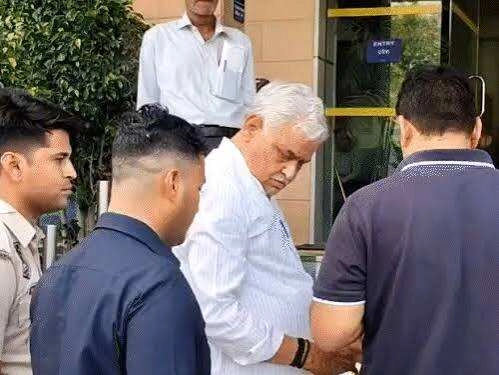
Agriculture Minister Kirori Lal Meena arrived at the ACB headquarters, where he made a bold statement in a video, asserting his willingness to face the consequences if found guilty of any wrongdoing. He challenged the authorities, saying, “If I am guilty, then arrest me; otherwise, please clarify the situation.” This declaration reflects his confidence in his integrity and underscores his demand for transparency regarding the allegations against him.
Meena’s arrival at the Anti-Corruption Bureau (ACB) signals a significant moment in the ongoing scrutiny of public officials and the accountability mechanisms in place. His assertive stance in the video indicates that he is prepared to confront any allegations head-on, insisting that if there is no basis for the claims, it is crucial for the authorities to provide clarity. This approach not only highlights his commitment to his role as a public servant but also emphasizes the need for a thorough investigation into any accusations that have been made.
The agriculture minister’s statement has sparked discussions on the larger issue of corruption within governmental bodies. It raises essential questions about how allegations are handled and the processes that are in place to ensure that justice is served without bias. As public trust in political figures is crucial for a functioning democracy, the response from the ACB and the subsequent actions taken will be closely monitored by both the media and the public. Ultimately, Meena’s call for transparency could set a precedent for how similar cases are addressed in the future, reinforcing the idea that accountability is essential in maintaining the integrity of public office.