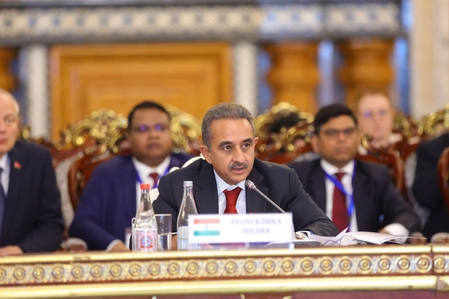
India’s Minister of State for External Affairs, Kirti Vardhan Singh, reaffirmed the country’s commitment to Central Asia and the Shanghai Cooperation Organization (SCO). His statements come at a time when India is actively seeking to strengthen its diplomatic and economic ties with Central Asian nations, recognizing the strategic importance of this region in terms of security, trade, and cultural exchange.
During discussions, Singh emphasized that India views Central Asia not only as a geographical entity but also as a critical partner in its efforts to enhance regional stability and cooperation. The SCO, which includes several Central Asian countries, serves as a platform for India to engage with its neighbors and collaborate on various issues, including counter-terrorism, economic development, and connectivity projects. By participating in the SCO, India aims to foster closer ties with member states and promote a shared vision of peace and prosperity.
Moreover, Singh highlighted India’s historical connections with Central Asia, which date back centuries. These ties have been reinforced through various cultural exchanges, trade relations, and mutual interests in tackling contemporary challenges. As India continues to expand its presence in the region, it seeks to contribute positively to the development of Central Asian countries while also ensuring that its own strategic interests are preserved. Through initiatives such as the International North-South Transport Corridor and other connectivity projects, India is poised to play a significant role in shaping the future of this vital region.
In conclusion, Kirti Vardhan Singh’s reaffirmation of India’s commitment to Central Asia and the SCO underscores the importance of these relationships in India’s broader foreign policy strategy. By prioritizing engagement with Central Asia, India aims not only to enhance its economic prospects but also to promote regional stability and cooperation in an increasingly complex geopolitical landscape.