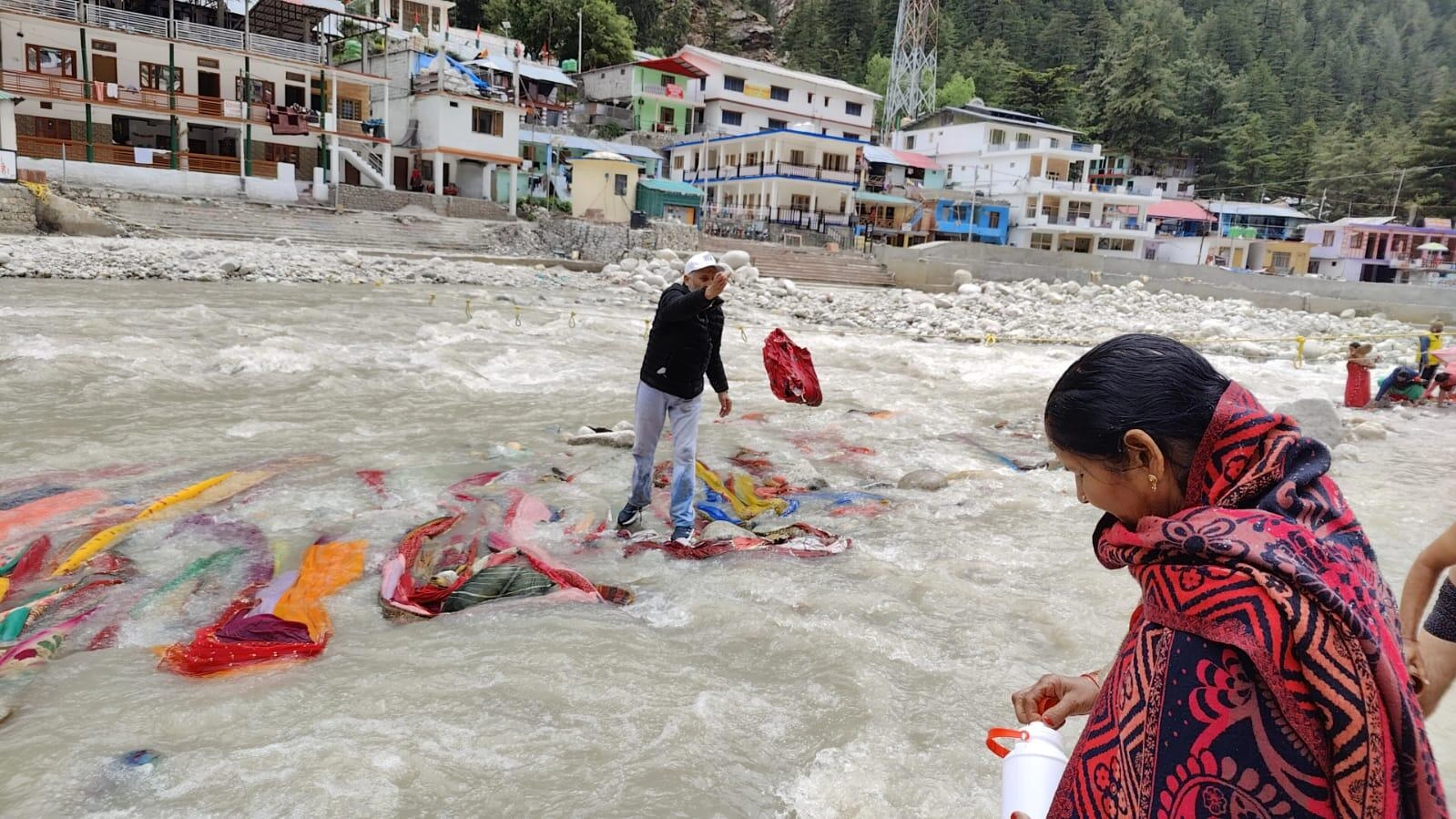
A recent viral video showcasing a large pile of clothes being washed in the Ganga and Yamuna rivers has sparked significant outrage, especially in the context of the ongoing Char Dham Yatra. These two rivers, revered in Indian culture and spirituality, are often referred to as purifiers, believed to wash away sins and cleanse the soul. However, the sight of people washing garments in their waters contradicts this sacred perception and raises serious concerns about the environmental impact on these holy rivers.
The Char Dham Yatra, a pilgrimage to the four sacred shrines in Uttarakhand—Yamunotri, Gangotri, Kedarnath, and Badrinath—draws thousands of devotees each year. The influx of pilgrims is meant to promote spiritual renewal and connection with the divine. However, incidents like the one captured in the viral video highlight a growing problem: the degradation of these sacred waters due to human activities. The washing of clothes in the rivers not only pollutes the water but also tarnishes their sanctity, leading to a dissonance between the spiritual significance of the rivers and the reality of their condition.
As discussions around this viral video continue, it has ignited a broader conversation about environmental conservation and the need for responsible tourism, particularly during such significant religious events. Pilgrims and tourists alike must be reminded of their role in preserving these natural treasures. The Ganga and Yamuna should remain symbols of purity and spirituality, and it is the collective responsibility of society to ensure that these rivers are treated with the respect they deserve. Awareness campaigns and stricter regulations may be necessary to protect these water bodies, ensuring they continue to serve as sacred sites for generations to come.