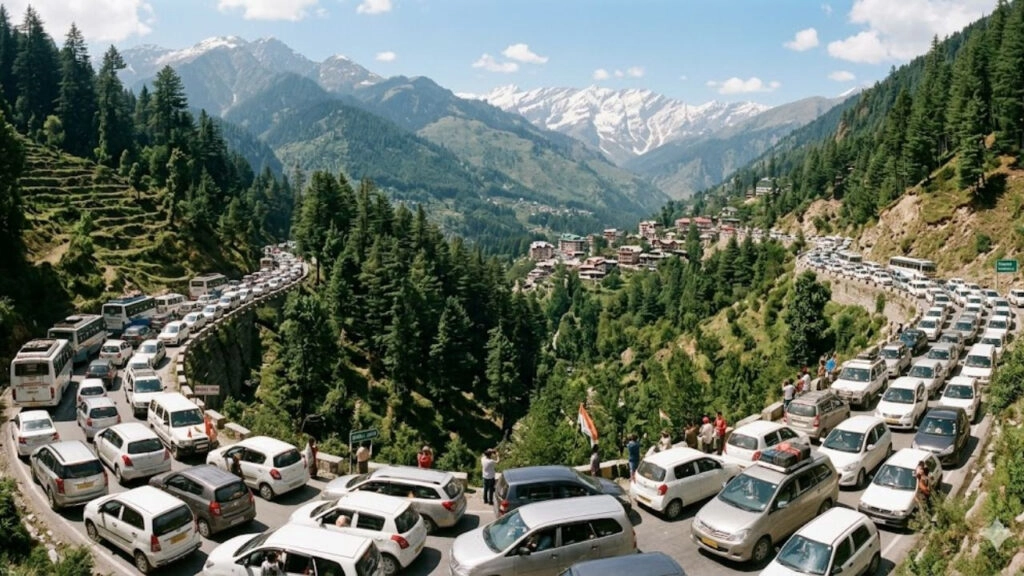
In recent times, the picturesque mountains have witnessed an overwhelming influx of tourists, leading to significant traffic congestion along one of the region’s most popular routes, from Manali to Nainital. The natural beauty of the Himalayas, coupled with the allure of serene lakes and lush green landscapes, has made these destinations a magnet for travelers seeking respite from the hustle and bustle of urban life. However, this surge in tourism has brought with it a series of challenges, particularly in terms of infrastructure and environmental sustainability.
The road connecting Manali to Nainital, often celebrated for its breathtaking views, has become a bottleneck due to the sheer volume of vehicles. Tourists flock to these scenic spots in search of adventure, relaxation, and a chance to connect with nature, but the sheer number of cars, buses, and other vehicles has led to significant delays. What was once a smooth drive through enchanting landscapes has turned into a frustrating experience for many, with long hours spent in traffic jams. Local residents and businesses also feel the impact, as the congestion can deter potential visitors and disrupt daily life.
Moreover, the environmental implications of such a massive influx of tourists cannot be overlooked. The delicate ecosystem of the mountains is under threat from pollution, waste, and the strain on natural resources. Efforts to promote sustainable tourism are becoming increasingly important, as stakeholders seek to balance the economic benefits of tourism with the need to preserve the natural beauty that draws visitors in the first place. As authorities and local communities grapple with these challenges, it is essential to find solutions that ensure the mountains remain a haven for both tourists and residents alike, without compromising their integrity.