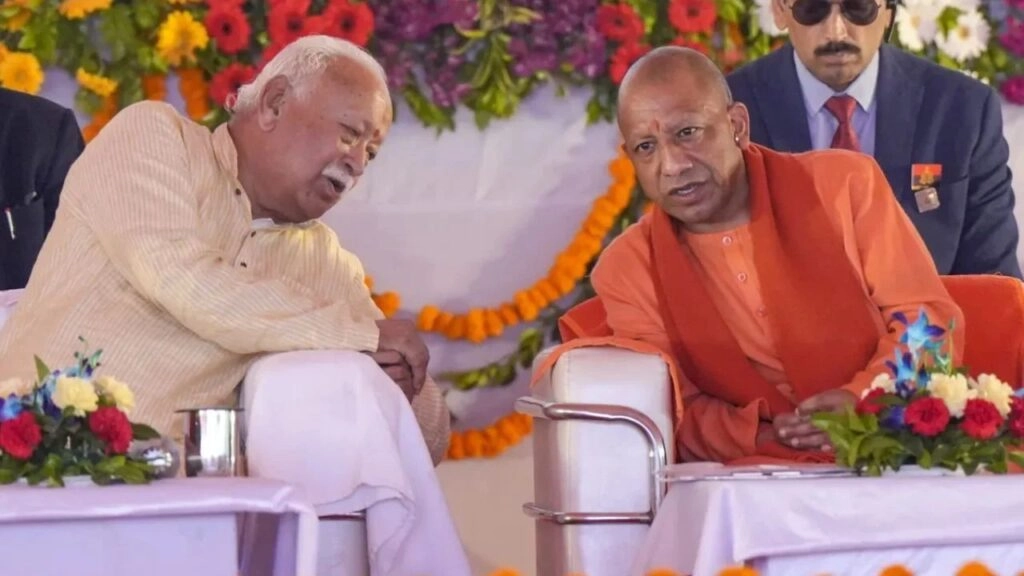
Mohan Bhagwat’s recent visit to Lucknow has garnered significant attention, particularly in the context of the Bharatiya Janata Party’s (BJP) strategy for maintaining its dominance in Uttar Pradesh. During his visit, Bhagwat emphasized the importance of the ‘Triple S’ model, which stands for “Sewa” (service), “Sanskriti” (culture), and “Samanvay” (coordination). This model aims to reinforce the BJP’s commitment to serving the people, preserving cultural values, and ensuring harmonious coordination among various communities. By promoting these core principles, the BJP seeks to solidify its support base and secure a hat-trick of victories in the state.
The significance of Bhagwat’s visit lies not only in the strategic framework he proposed but also in its timing. With upcoming elections on the horizon, the BJP is keen to rally support and present a united front. By focusing on service to the people, the party aims to connect with voters on a grassroots level, addressing their needs and concerns directly. Additionally, the emphasis on culture underscores the party’s intent to resonate with the traditional values held by many in Uttar Pradesh, thereby reinforcing their identity and political allegiance.
Furthermore, the ‘Samanvay’ aspect of the model reflects the BJP’s efforts to foster cooperation among different social groups. By promoting unity and collaboration, the party hopes to dispel any misconceptions about its policies being divisive. Bhagwat’s address in Lucknow served as a clarion call for party workers and supporters to embrace this model, highlighting the role each individual can play in the larger political narrative. Ultimately, the success of the BJP’s ‘Triple S’ model will depend on its execution and the party’s ability to translate its ideals into tangible outcomes that resonate with the electorate.