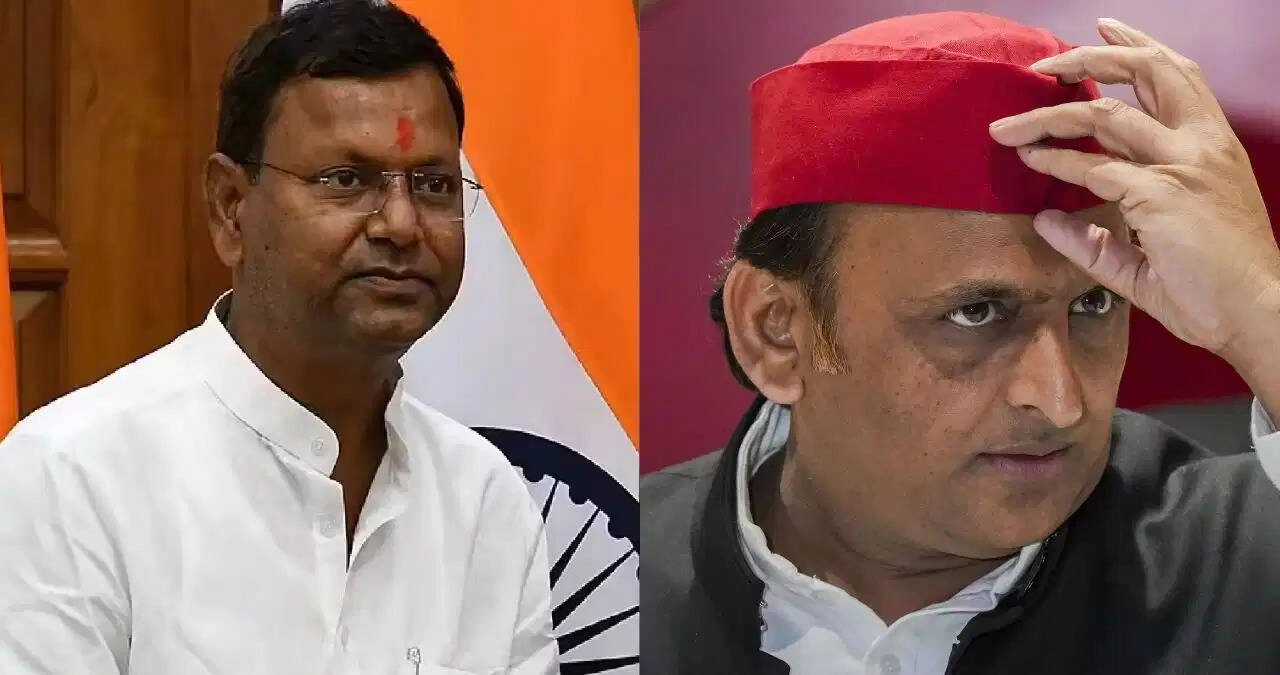
The political landscape in Uttar Pradesh has recently intensified, particularly with the sharp critique delivered by the BJP state president, Pankaj Chowdhary, aimed at the leader of the Samajwadi Party, Akhilesh Yadav. Chowdhary has accused Yadav of playing divisive politics by allegedly favoring a particular caste through the establishment of a ‘Caste-Specific Commission.’ This accusation reflects the ongoing tensions among political parties in the state, as they navigate the complex social dynamics that caste plays in the electoral arena.
Chowdhary’s remarks come at a time when political parties are gearing up for upcoming elections, and caste-based politics is a significant factor in voter mobilization in Uttar Pradesh. He argued that such commissions are detrimental to the social fabric of society, as they promote favoritism and discrimination rather than unity and equality. This statement underscores the BJP’s strategy to position itself as a party that champions inclusivity and equal opportunity for all, contrasting with what they characterize as the divisive tactics employed by their opponents.
Akhilesh Yadav, on the other hand, has defended his party’s stance and the establishment of the commission, asserting that it is aimed at addressing the genuine concerns and grievances of underrepresented communities. The Samajwadi Party has historically positioned itself as a champion of social justice, and Yadav’s response indicates that he plans to continue advocating for policies that support marginalized groups. The back-and-forth between the two leaders illustrates not only the competitive nature of Uttar Pradesh politics but also the broader implications of caste in shaping party narratives and electoral strategies.
As the political temperature rises in Uttar Pradesh, the discourse surrounding caste and representation is likely to take center stage. The BJP and Samajwadi Party are expected to intensify their campaign efforts, each seeking to resonate with voters through their respective narratives. The outcome of this political rivalry could have significant ramifications for the future of governance and social cohesion in one of India’s most populous states, making it a critical focal point in the country’s political landscape.