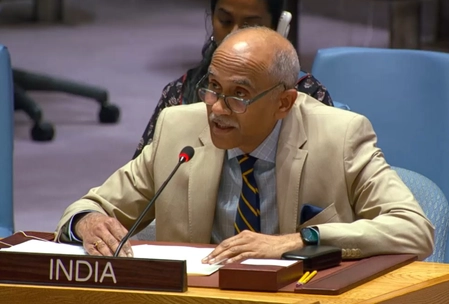
During a recent session at the United Nations, India sharply criticized Pakistan for its actions, particularly in relation to the ongoing violence against Afghan citizens during the holy month of Ramadan. The Indian representative emphasized that such attacks are not only inhumane but also reflect a disregard for the sanctity of the month, which holds particular significance for Muslims worldwide. The Indian delegation’s comments highlighted the need for accountability and called for the international community to take a strong stance against such violations of human rights.
India’s assertion comes in the context of rising tensions in the region, where the plight of Afghan citizens has been exacerbated by ongoing conflicts. The representative underscored that during Ramadan, a time for reflection, compassion, and community, the suffering inflicted upon innocents is particularly egregious. Such actions undermine the values of humanity and violate the fundamental principles of peace and coexistence.
Furthermore, India’s criticism of Pakistan is not merely a reaction to immediate events but part of a broader narrative that seeks to address the longstanding issue of terrorism and violence in South Asia. By drawing attention to the plight of Afghan civilians, India aims to highlight the urgent need for collaborative efforts to foster stability and security in the region. The Indian delegation urged the international community to unite against terrorism and to protect the rights of vulnerable populations, particularly in conflict zones.
In conclusion, India’s remarks at the UN serve as a stark reminder of the challenges faced by Afghan citizens and the moral imperative to respond to violence and injustice. The condemnation of Pakistan’s actions is a call to action for all nations to prioritize human rights and to work collectively towards peace. The situation underscores the importance of international dialogue and cooperation in addressing the root causes of conflict and promoting a more humane and just world.