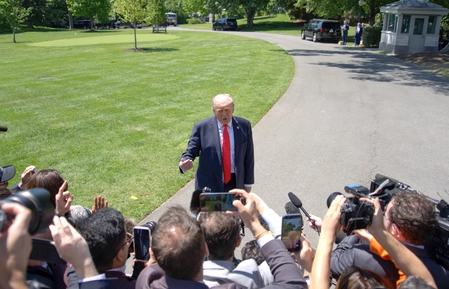
Before his trip to China, former President Donald Trump expressed confidence in Chinese President Xi Jinping, praising his leadership. Trump indicated that he believes there will be no escalation in tensions regarding Taiwan during his visit. The comments reflect an attempt to maintain a diplomatic tone in the complex relationship between the United States and China, particularly concerning the sensitive issue of Taiwan, which China considers a breakaway province.
Trump’s remarks suggest a strategic approach to handling international relations, recognizing the importance of dialogue and cooperation with key global players like China. By commending Xi, Trump seems to be signaling a willingness to engage constructively, rather than adopting a confrontational stance. This approach may be aimed at fostering a more stable environment for discussions on various issues, including trade, security, and regional stability.
The situation surrounding Taiwan remains a critical point of contention in U.S.-China relations. Both nations have their own perspectives on Taiwan’s status, with China asserting its claim over the island and the U.S. supporting Taiwan’s self-defense capabilities. Trump’s assertion that tensions will not escalate could be seen as an effort to reassure both American allies in the region and the international community that dialogue remains a priority over military confrontation.
Overall, Trump’s comments reflect a nuanced understanding of the geopolitical landscape and the need for careful navigation of sensitive topics. As leaders from both nations prepare for discussions, the hope is that a path forward can be forged that emphasizes cooperation and reduces the risk of misunderstandings that could lead to conflict. The outcome of these diplomatic interactions will likely have significant implications for the future of U.S.-China relations and regional stability in East Asia.