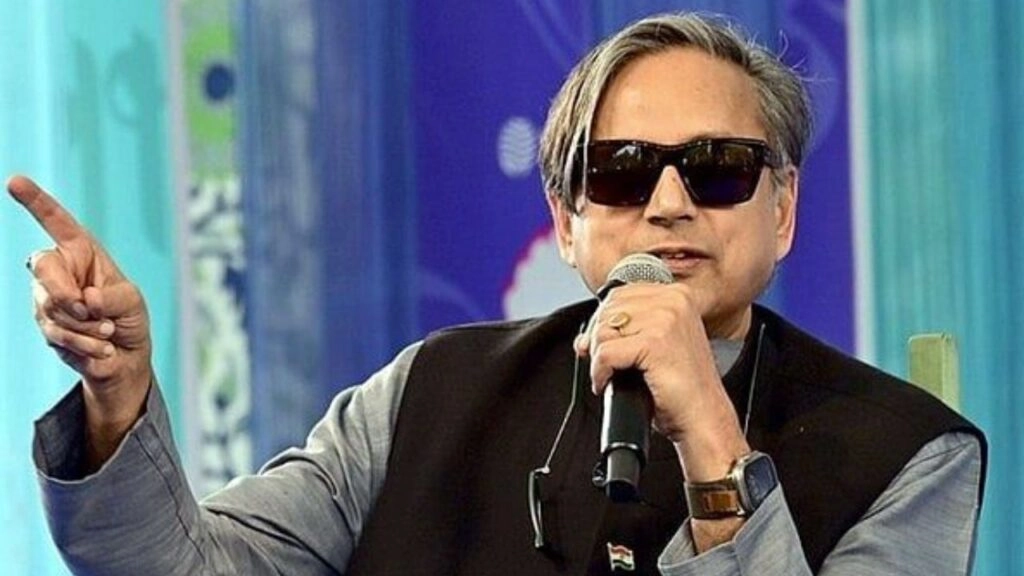
Shashi Tharoor, a prominent Indian politician and member of the Indian National Congress, recently raised significant concerns about the integrity of the electoral process in India. His comments specifically addressed a troubling scenario where the Bharatiya Janata Party (BJP) secured victory in a recent election by a margin of 3 million votes, yet simultaneously managed to disenfranchise an astonishing 3.4 million voters. This discrepancy has sparked a heated debate about the fairness of the democratic process and the implications of such exclusion on the representation of the electorate.
Tharoor’s observations have gained traction on social media, particularly in the context of West Bengal, where he highlighted the stark contrast between the votes cast and the number of eligible voters who were unable to participate. This situation raises critical questions about electoral transparency and the mechanisms that govern voter registration and participation. The apparent contradiction between the BJP’s victory and the exclusion of a substantial number of voters points to systemic issues within the electoral framework that must be addressed to ensure a truly representative democracy.
The viral nature of Tharoor’s comments underscores a growing concern among citizens regarding the state of democracy in India. Many are left wondering what measures are being taken to safeguard the rights of voters and prevent such disenfranchisement in future elections. Tharoor’s call for accountability and reform resonates with a populace increasingly aware of the challenges facing the democratic process. As discussions continue, it becomes evident that the integrity of elections is paramount for maintaining public trust and ensuring that every voice is heard and counted in the democratic arena.