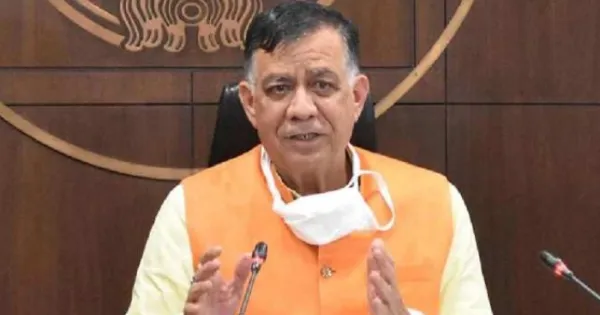
Satish Mahana, a prominent political figure, has emphasized that the essence of democracy cannot be fully realized without the active empowerment of committees. He argues that committees play a crucial role in fostering democratic values by ensuring that diverse voices are heard and represented within the political framework. In his view, these committees act as vital instruments for citizen engagement, allowing individuals to contribute to decision-making processes that affect their lives and communities.
Mahana’s assertion highlights the importance of inclusive governance, where various stakeholders can collaborate and express their opinions. By empowering committees, governments can facilitate a more participatory approach to democracy, promoting transparency and accountability. This empowerment enables committees to serve as platforms for dialogue and discussion, addressing the concerns of different groups and ensuring that their needs are taken into account in policy formulation.
Moreover, Mahana believes that the effectiveness of committees hinges on their ability to operate independently and with adequate resources. This independence is essential for them to function as true representatives of the people, free from undue influence. By providing the necessary support and autonomy, governments can strengthen these committees, ultimately enhancing the democratic process and reinforcing the principles of equality and justice.
In summary, Satish Mahana’s perspective underscores the critical role of empowered committees in a thriving democracy. Their contributions are invaluable in shaping policies and fostering an environment where every citizen feels valued and heard. Without such empowerment, democracy remains incomplete, as it fails to fully engage the populace in the governance process. Therefore, prioritizing the empowerment of committees is essential for the health and sustainability of democratic systems.